From Data to Diagnosis: Why Medical Device Storage Is Critical for AI at the Edge
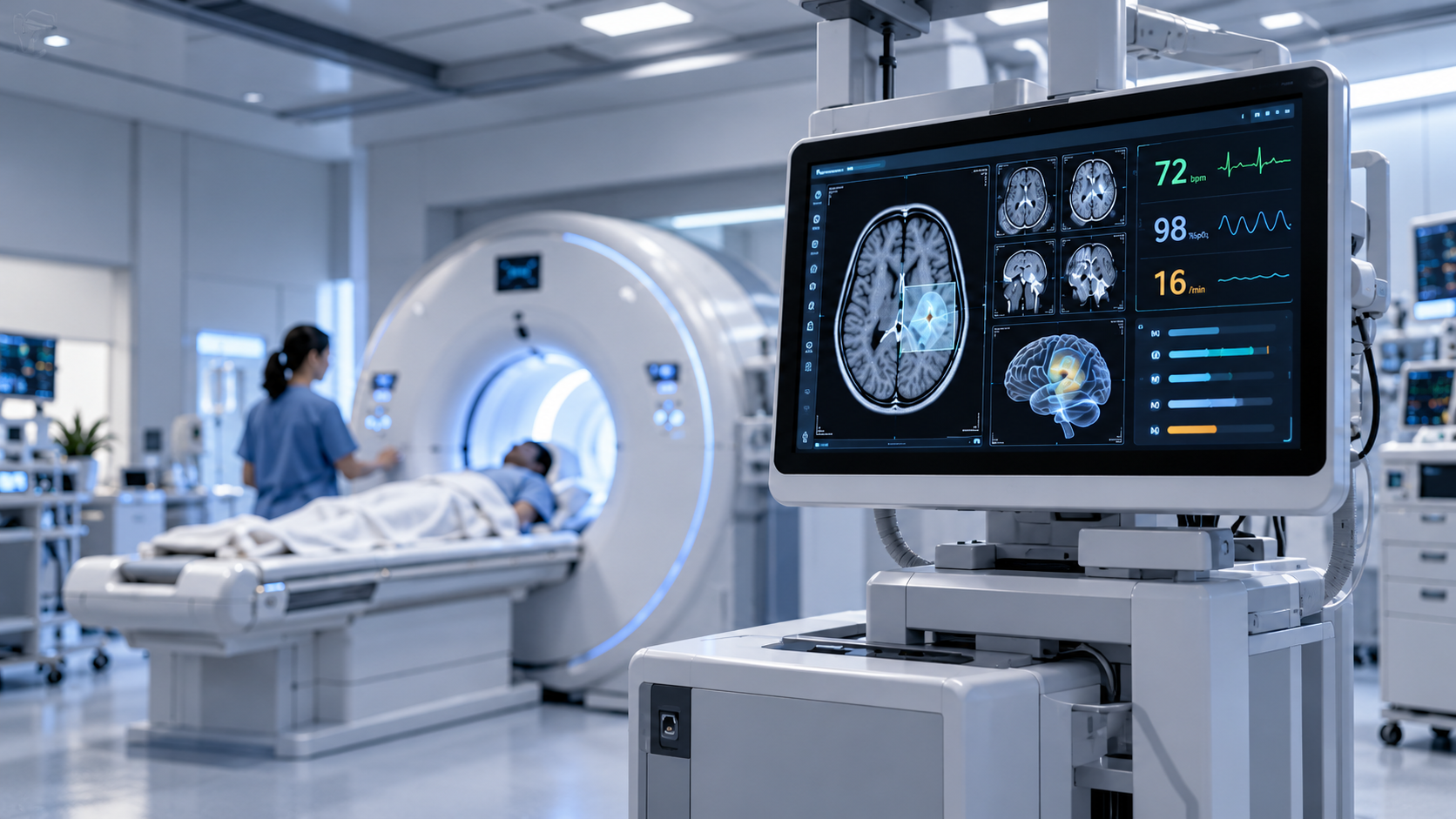

Medical devices are becoming more intelligent, connected and data-intensive. Diagnostic imaging systems, patient monitors, surgical robots and AI-assisted platforms now generate and process growing volumes of critical information.
This shift is changing what manufacturers need from medical device storage. Capacity and performance still matter, but modern systems must also deliver predictable performance, withstand continuous operation and remain available throughout long product lifecycles.
Medical edge AI devices must also address increasingly stringent cybersecurity and data-protection requirements. Secure, industrial-grade storage can help protect data integrity, support device security and simplify efforts to meet applicable regulatory requirements. It can also help healthcare organizations safeguard sensitive patient information as part of their broader compliance strategy.
As AI processing moves closer to where medical data is generated, reliable local storage is becoming a core part of the medical edge.
The Growing Challenge of Medical Device Storage
Today’s medical devices are increasingly software-driven and connected, while producing more data than ever before. At the same time, medical OEMs face long qualification cycles, demanding lifecycle requirements, growing cybersecurity expectations and systems that may operate continuously for years.
Storage sits at the center of these demands.
A medical device may need to retain patient records, diagnostic images, alarms, application data and system logs. AI-enabled systems may also store operating software, AI models, model versions and audit information.
Medical-grade storage therefore needs to provide more than raw capacity.
Key requirements include high data integrity, reliability, predictable performance, cybersecurity and long-term product availability. Continuous logging, imaging workloads and 24/7 operation also place additional pressure on NAND endurance, error correction, wear management and data retention.

As medical devices become more intelligent, storage is becoming part of the infrastructure that makes that intelligence dependable. AI-enabled systems increasingly need to capture, store, protect and process information locally, making reliability, cybersecurity, predictable performance, endurance and lifecycle stability more important than ever.
AI Is Changing Storage Requirements
Artificial intelligence is reshaping healthcare technology. Imaging systems can use AI to support analysis, patient-monitoring platforms can identify patterns in continuous data streams, and surgical systems can combine real-time information with advanced processing.
AI also changes the underlying storage architecture.
AI-enabled medical devices need dependable access not only to patient and diagnostic data, but also to software, models, logs and audit trails. Edge AI can support real-time insights, automate tasks, streamline workflows and reduce dependence on network connectivity.
These capabilities increase the need for low-latency access and predictable performance. Processors, GPUs and accelerators may perform the AI computation, but they still depend on storage that can reliably capture, deliver and preserve the data, models and software they need.
Storage as Part of the Medical AI Infrastructure
In AI-driven medical devices, storage is no longer simply a passive component.
Consider an intelligent imaging platform. Sensors generate diagnostic information that must be captured and stored. Applications and AI models need to be loaded quickly and reliably. Data may be processed repeatedly, while results, logs and audit information must also be retained.
Reliability is particularly important because inaccurate, corrupted or unavailable information in medical systems can directly affect clinical workflows and patient care.
Diagnostic imaging systems such as CT and MRI scanners, for example, generate high-resolution DICOM images. Because image integrity is critical to accurate clinical diagnosis, storage solutions with advanced error correction capabilities can help detect and correct data errors, supporting the reliability of medical imaging data.
In some regions, these systems may also operate in environments with unstable power infrastructure. An unexpected power outage during image acquisition or storage can put valuable patient data at risk. Power Loss Protection (PLP) can help safeguard in-flight data by supporting the completion of pending write operations and preserving critical data structures, enabling reliable system recovery and continued access to medical images after power is restored.
Traceability matters too. When systems must retain software versions, AI model versions or audit logs over time, dependable storage becomes part of the foundation for maintaining an accurate and consistent record.
Why Edge Computing Raises the Stakes
Medical computing is moving closer to the edge. Instead of sending every piece of information to centralized infrastructure, more devices can process data locally. This can reduce latency, lower cloud-storage and data-transfer requirements, and enable faster responses.
A patient monitor, for example, may continuously collect and evaluate data on premises, providing near-real-time feedback without the delay associated with sending data to the cloud for processing and then waiting for a response. Only selected events, such as logs, alarms or other relevant records, may need to be transmitted.
Local processing can reduce response times, lower dependence on network connectivity and give healthcare organizations greater control over sensitive information.
As computing moves into the device, storage must move with it. Medical edge storage may operate continuously inside compact hardware and over long service lives, increasing the importance of endurance, thermal behavior, reliability and lifecycle stability.
Different Workloads Need Different Storage Architectures
Medical storage workloads vary significantly.
MRI and CT systems can generate large imaging datasets and require high throughput. Digital pathology may involve extremely large whole-slide images combined with AI analysis. Endoscopy platforms can continuously record high-resolution video, while patient monitors may generate smaller records around the clock.
Swissbit’s portfolio addresses these different architectures. N7000 and A2000 PCIe NVMe SSDs are positioned for performance-intensive systems such as AI-enabled imaging and high-performance edge computing. X-75 and X-78 SATA SSDs suit established SATA-based platforms. EM-30 e.MMC supports compact embedded designs, while E2000 embedded BGA storage targets highly integrated systems with limited board space.
The right choice depends on the application’s performance, capacity, endurance, security, environmental and lifecycle requirements.
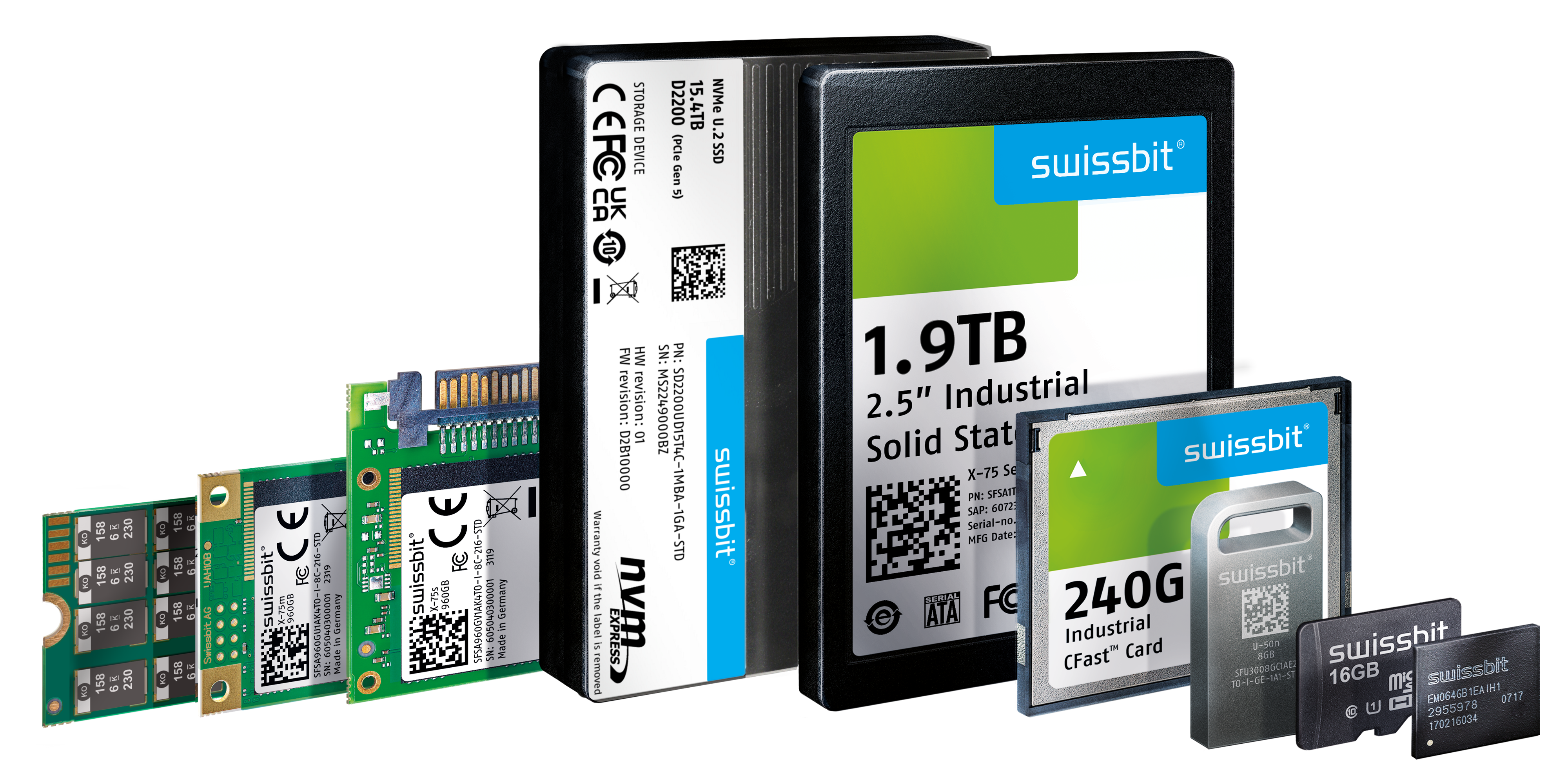
Industrial SSDs built for embedded reliability
Swissbit industrial SSDs combine endurance, data integrity, life cycle control and long-term availability for demanding embedded and industrial applications. Choose from M.2 and compact BGA solutions to match your system’s mechanical and operational requirements.
Storage Is Becoming a Strategic Design Decision
As medical devices become more intelligent, storage is becoming part of the infrastructure that makes that intelligence dependable.
AI-enabled systems increasingly need to capture, store, protect and process information locally, including diagnostic data, patient records, software, AI models, logs and audit trails.
For medical OEMs, storage selection is therefore no longer simply a question of capacity and cost. Reliability, cybersecurity, predictable performance, endurance and lifecycle stability are becoming equally important design considerations.
In tomorrow’s medical devices, storage will not simply hold the data. It will help make the intelligence reliable.
Frequently Asked Questions
Storage plays a critical role in AI-enabled medical devices because these systems must reliably capture, store and access diagnostic data, patient information, software, AI models, logs and audit trails. As more AI processing happens at the edge, dependable local storage helps support data integrity, predictable performance and continuous operation.
Medical device storage typically needs to provide high data integrity, reliability, predictable performance, strong endurance, cybersecurity features and long-term product availability. Depending on the application, thermal behavior, power-loss protection and error correction may also be important.
Edge AI moves more data processing into the medical device itself rather than relying entirely on cloud infrastructure. This increases the need for low-latency access, consistent performance and reliable local storage for AI models, diagnostic data, software and system logs.
Many medical devices operate continuously and may generate data around the clock. Repeated write operations, logging, imaging workloads and long service lives can place significant stress on NAND flash. High endurance, effective wear management and robust error correction help support reliable operation over the device lifecycle.
Medical OEMs should evaluate storage based on the specific workload and system architecture. Important factors include performance, capacity, endurance, interface, form factor, cybersecurity, environmental conditions, data-retention requirements and long-term product availability. The right solution will differ between high-performance imaging systems, compact embedded devices and continuously operating patient-monitoring platforms.

Stefan Zieboll is a Product Marketing Manager with over 10 years of experience in product management and marketing for technology-driven solutions. He brings strong domain expertise across Automation & Robotics, Energy & Smart Infrastructure, Healthcare, as well as Gaming & Signage, with a focus on translating complex technologies into clear customer value and driving market adoption. Follow him on LinkedIn.