Where enterprise-class storage meets industrial reality
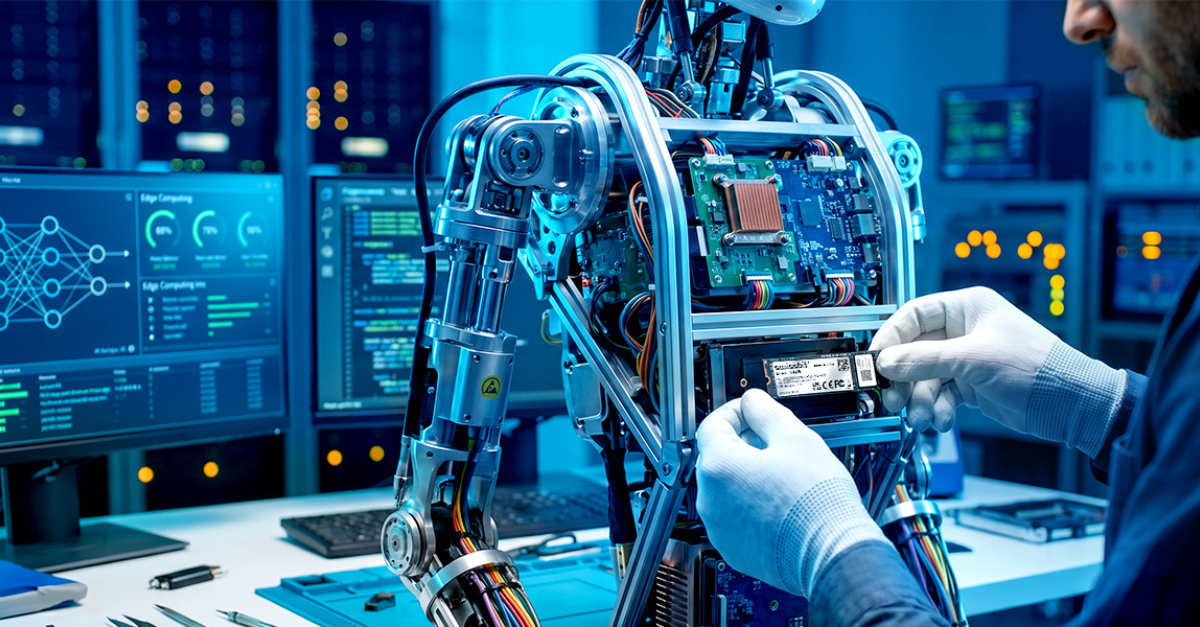

Why demanding edge, networking and industrial systems need NVMe SSDs built for real workloads
High-performance storage is no longer limited to data centers. Edge AI systems process images locally, networking platforms move large data volumes in real time, and industrial PCs, gateways, data loggers and medical imaging systems must store, retrieve and analyze data continuously.
In these applications, storage affects more than capacity. It influences system responsiveness, data integrity and long-term reliability. Peak performance is not enough. The decisive factor is how an SSD behaves under sustained load, mixed workloads, changing temperatures and unexpected power loss.
This is where the Swissbit A2000 Series comes in: enterprise-class NVMe performance combined with industrial-grade robustness for systems that require speed, consistency and reliability in real operating conditions.
From peak performance to real workload performance
Many SSDs look fast on paper. Peak sequential read and write values are easy to compare, but they do not always reflect real embedded or industrial workloads and often drop significantly after their caches are used up.
Typical systems run operating system processes, application data, logging, buffering, caching and random write operations in parallel. Under these conditions, latency peaks or unstable write performance can affect the entire application. A data logger may miss critical information, an edge AI system may slow down during image processing, or a networking platform may lose responsiveness under traffic peaks.
For system designers, the value of storage lies in predictable behavior: high bandwidth, stable IOPS, consistent throughput and low latency over time.

“Modern edge, networking and industrial systems need storage that goes beyond peak benchmark performance. The decisive factor is predictable behavior under real workloads: consistent throughput, low latency, data protection during power loss, strong security and industrial-grade reliability in demanding operating conditions.”
PCIe Gen4 for demanding embedded systems
As embedded systems become more powerful, demand for faster local storage increases. PCIe Gen4 provides the bandwidth needed for data-intensive applications such as edge AI , high-density networking, industrial automation, medical imaging and enterprise edge infrastructure.
However, higher interface speed must not come at the expense of thermal behavior, endurance or data protection. This is especially important in compact systems with limited space and restricted airflow.
The A2000 Series uses PCIe Gen4x4 and NVMe 1.4 to deliver over 6 GB/s sequential read and over 5 GB/s sequential write performance, as well as over 1M random read IOPS and up to 900k random write IOPS. More importantly, its architecture is designed to maintain consistent behavior beyond short benchmark peaks.
Consistency under mixed workloads
Industrial and enterprise edge systems often depend on stable random write performance and predictable latency. Logging, caching, image processing, routing and system storage all place different demands on the SSD, often at the same time.
The A2000 family uses DRAM and TLC direct FTL architecture to support high endurance and consistent performance. This reduces dependency on short-term cache effects and supports stable behavior under continuous or mixed workloads.
For latency-sensitive applications, the series is optimized for low-latency operation, with QoS 99.99% 4K read latency of 116 µs and QoS 99.99% 4K write latency of 47 µs. This helps maintain responsiveness in edge AI, IoT gateways, industrial PCs and medical systems.


The A2000 series can be implemented in a range of mixed workloads from healthcare, data logging and edge AI applications. Also available with a heat sink, the SSD proves consistent performance across many use cases.
Data protection during power loss
Unexpected power loss is a real risk in industrial and edge environments. Systems may operate in remote locations, control cabinets, mobile equipment or infrastructure installations. If data is being written during a power failure, the result can be data loss, file system corruption or application disruption.
The A2000 Series addresses this with hardware power-loss protection. Integrated capacitors help protect data without relying on operating-system support, making the SSD suitable for embedded designs where protection must be handled at device level.
Industrial requirements beyond the data center
Enterprise SSDs are typically designed for controlled data center environments. Industrial and embedded systems often require extended temperature support, compact form factors, long availability and reliable operation in dense or thermally challenging designs.
The A2000 family is available in commercial and industrial temperature versions. Its M.2 2280 form factor supports compact embedded systems that require high performance in limited space, while E1.S and U.2 options provide flexibility for other integration concepts.
Security at storage level
Edge and industrial systems may store sensitive operational data, logs, software, AI models, configuration files or customer information. Storage security is therefore part of the overall system security concept.
The A2000 Series supports AES-256 encryption and TCG Opal 2.0 for secure storage and access control. Secure boot support further strengthens the platform for applications where data integrity and trusted operation are essential.
Endurance matched to the workload
Write loads vary widely. Some systems use the SSD as a boot drive or main storage device. Others continuously write logs, cache data or operate SSDs in RAID environments.
The A2000 is designed for mixed-use cases such as boot drives, main storage and systems exposed to commercial or industrial temperature ranges. It uses industrial-grade TLC and supports endurance above 0.5 drive writes per day for a reference JEDEC enterprise workload, with one-year data retention at end of life.
For write-intensive applications, the A2200 uses enterprise-grade TLC. It is designed for logging, caching, temporary storage and RAID use cases, with endurance above 1 drive write per day over five years for a reference JEDEC enterprise workload, with three-month data retention at program/erase cycle end of life. This allows system designers to select the endurance level that best fits the application while staying within one platform concept.
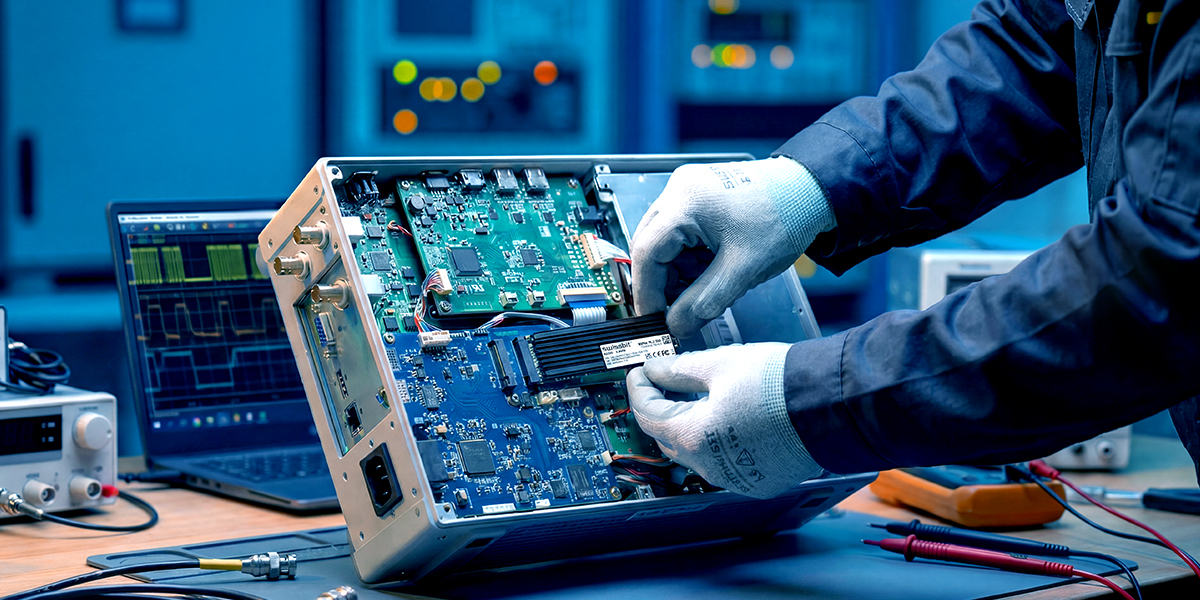
Enterprise-class NVMe performance, built for industrial reality: the Swissbit A2000 Series delivers PCIe Gen4 speed, consistent low latency, power-loss protection and robust endurance for demanding edge, networking and industrial systems. Discover storage designed for real workloads.
Technology control and lifecycle confidence
In industrial, infrastructure and enterprise edge markets, SSD selection is not based on performance alone. Long-term availability, technology control and supply-chain reliability are also important.
The A2000 Series is based on Swissbit firmware and controller technology, combined with Swissbit-packaged BiCS8 3D TLC NAND. This supports life cycle management, product reliability and technical support for systems with long service lives.
Typical applications
The A2000 Series is designed for use cases where high performance, consistency and reliability must come together. Typical applications include edge AI, image processing, high-performance networking and routing, IoT gateways, industrial PCs, medical imaging systems, enterprise edge servers, data loggers and write-intensive embedded systems.
Across these applications, the requirement is clear: storage must be fast, predictable, secure and robust enough for real operating conditions.
When storage performance becomes system reliability
Selecting storage for edge, networking and industrial systems is not simply a question of peak speed. What matters is whether that performance remains predictable when workloads intensify, temperatures change or power is unexpectedly interrupted.
By combining PCIe Gen4 NVMe performance with industrial-grade robustness, hardware power-loss protection, integrated security and endurance options for different workload profiles, the Swissbit A2000 Series gives system designers a storage platform built for these real-world demands. For applications where inconsistent latency, data loss or premature failure are not acceptable, this is what turns high-performance storage into dependable infrastructure.
Interested in learning more?
Our experts are happy to help.

Axel is Senior Product Manager for Storage Solutions. With over twenty years of experience in product management for microcontrollers, SSDs, and NAND storage solutions, he is responsible for the definition, development, marketing, and lifecycle management of highly reliable storage products at Swissbit, with a particular focus on NVMe solutions.