Edge AI Is Only as Intelligent as the Infrastructure Behind It
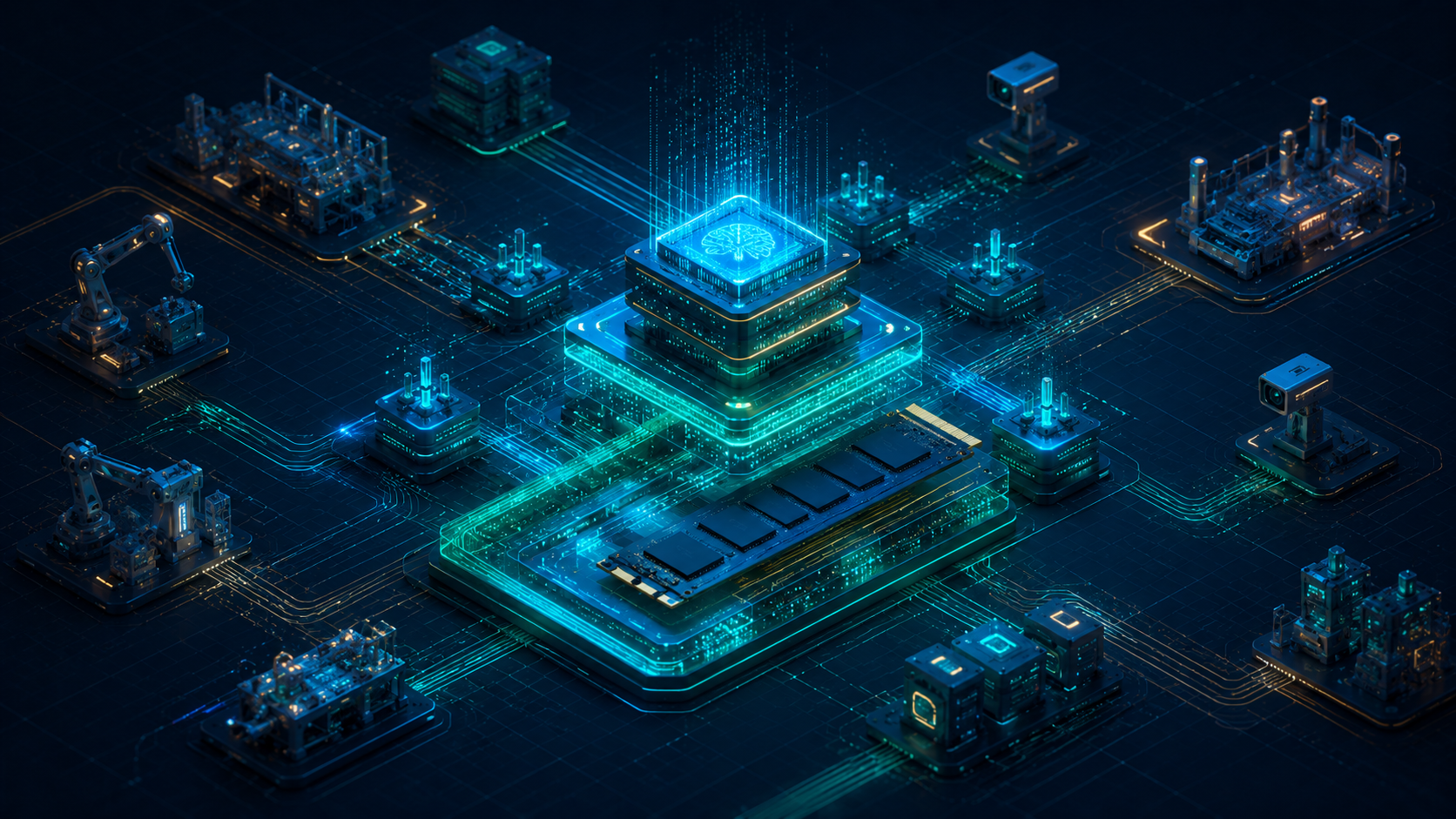

Artificial intelligence is moving beyond centralized data centers to the Edge, into factories, machines, robots, autonomous vehicles, and industrial equipment.
Edge AI is often discussed in terms of processors, accelerators, and advanced LLM models. Yet industrial success depends on more than compute performance. The entire platform must operate reliably, securely, and predictably throughout a long product lifecycle. Storage is therefore a strategic part of the architecture, not a component to select at the end of development.
Why Industrial AI Is Moving to the Edge
Cloud AI offers substantial computing power and scalability, but many industrial applications cannot rely entirely on remote infrastructure.
Robotics, machine vision, quality inspection, autonomous mobile robots, and machine control may require decisions within milliseconds. Sending data to the cloud and waiting for a response can introduce unacceptable latency. Systems must also continue operating during network interruptions or in locations without reliable high-bandwidth connectivity.
Local processing gives companies greater control over sensitive production data, including images, process parameters, quality records, and proprietary AI models. Keeping this information within the machine or factory can reduce exposure and simplify data governance.
Edge AI delivers faster responses, greater autonomy, stronger data control, and less dependence on cloud bandwidth. The result can be higher productivity, more predictable costs, and fewer external dependencies.

Compute performs the inference, but storage preserves the knowledge, evidence, and continuity that make industrial AI valuable.
From Language Models to Intelligent Machines
AI capabilities at the edge are advancing rapidly. Large language models understand and generate text, while vision-language models add visual interpretation, enabling systems to identify objects, assess conditions, and provide context.
Vision-language-action models go further by linking perception and understanding with physical action. Instead of identifying an object and handing information to a separate controller, a VLA-enabled robot can interpret a situation and determine an appropriate response.
As AI moves from recognizing conditions to making operational decisions, platform reliability becomes critical. Intelligent machines must securely retain models, configurations, updates, logs, and operational data.
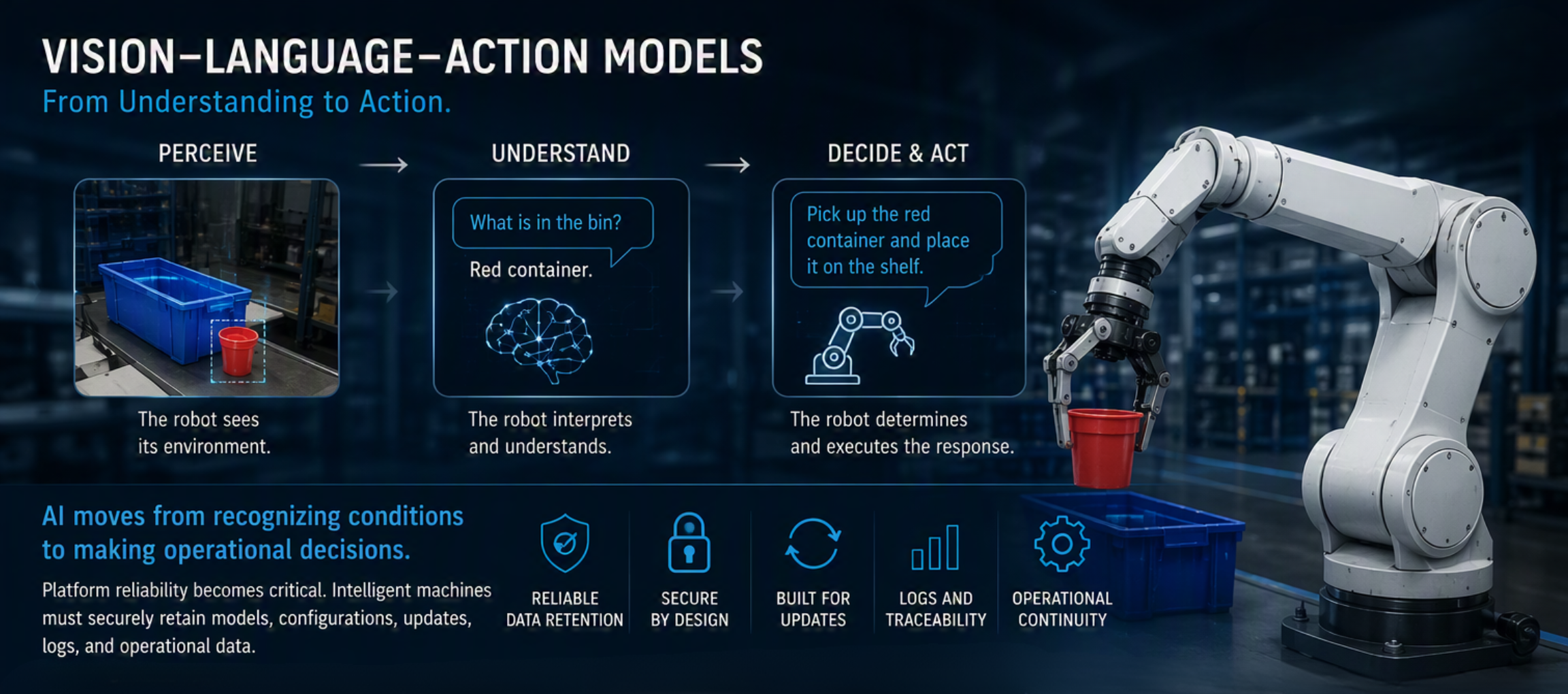
Vision-language-action models turn visual perception into physical action at the industrial edge—making reliable, secure industrial storage essential for AI models, updates, logs, and operational continuity.
The Industrial SSD as the Memory of Edge AI
An industrial SSD provides the persistent memory of an Edge AI system. It stores the operating system, applications, AI models, configurations, sensor data, inference results, diagnostic logs, and traceability records.
Many applications write data continuously. Vision systems process thousands of images per shift, predictive-maintenance platforms collect sensor data around the clock, and autonomous robots record navigation and operating information. These workloads place sustained pressure on storage.
A failure can prevent models from loading, corrupt data, interrupt production, or require costly service. Storage should therefore be treated as essential operational infrastructure, not a commodity chosen mainly by capacity and price.
Peak Performance Is Not Industrial Reliability
Headline benchmark results do not necessarily identify the best storage product for industrial Edge AI. More important considerations include lifetime write volume, continuous operation, temperature range, vibration and shock, unexpected power loss, health monitoring, component availability, and protection of models and production data.
A robust industrial SSD may require high endurance, advanced error correction, power-loss protection, secure firmware, health monitoring, and extended-temperature support.
Controlled firmware and bill-of-materials management also matter. Industrial platforms may remain in production for years and operate much longer in the field. Uncontrolled component changes can cause qualification issues, software incompatibilities, and inconsistent system behavior. For OEMs and machine builders, consistency can be as important as speed.
Selecting Compute and Storage as a Complete System
Edge AI platforms may use CPUs, GPUs, or dedicated NPUs from suppliers such as NVIDIA, Intel, AMD, Qualcomm, Hailo, or NXP. Each architecture offers different strengths, including inference performance, energy efficiency, software compatibility, compact integration, and embedded lifecycle support.
Processor selection should reflect the workload, power budget, environment, cost target, and software ecosystem. Evaluating the accelerator alone, however, can produce an unbalanced design.
Storage affects model-loading speed, update reliability, data retention, and resilience during power or environmental events. The key question is not simply which processor delivers the highest performance, but which combination of compute, storage, software, security, and lifecycle support will perform reliably throughout the system’s operating life.
Designing Storage into Edge AI from the Beginning
Postponing storage decisions can create unnecessary risk, particularly in ODM and OEM projects. Endurance, capacity, security, temperature range, interface, and form factor should be defined early, ideally a specific type of SSD or a model is defined in the specification sheet of the Edge AI PC.
Capacity planning must account for future model versions, software updates, diagnostics, logs, and retained production data—not just the initial operating system and model.
Physical design also matters. Removable M.2 SSDs can simplify maintenance and upgrades, while soldered BGA storage supports compact, rugged, vibration-resistant systems. Early planning helps prevent qualification delays, redesigns, and sourcing problems.
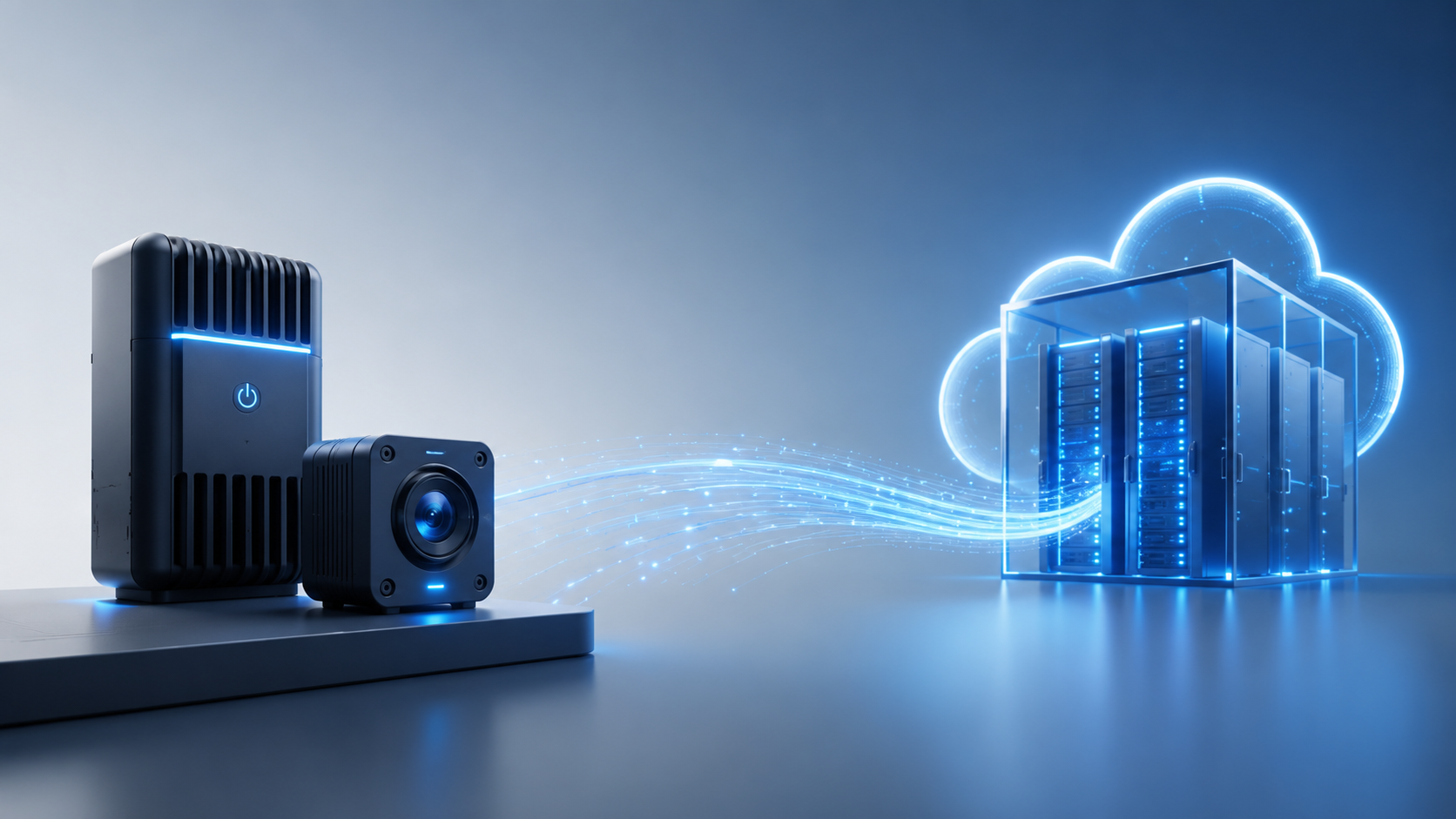
Learn why edge AI infrastructure is critical for running advanced workloads such as Vision-Language-Action (VLA) models closer to where data is generated. Swissbit storage solutions help ensure the integrity, reliability, and availability of data from the edge to the core.
Why Lifecycle Management Matters
Industrial Edge AI systems have much longer service expectations than consumer electronics. Machines may operate for a decade or more, while OEMs and integrators may support the same platform across multiple generations and sites.
Long-term availability, predictable behavior, controlled changes, and transparent health information directly affect total cost of ownership. Standardizing on an industrial storage platform can simplify validation, procurement, maintenance, and field support while reducing differences across otherwise identical systems.
Swissbit industrial SSDs are designed for embedded and industrial environments where endurance, data integrity, lifecycle control, and long-term availability are essential. M.2 and compact BGA options allow designers to match storage to the mechanical and operational requirements of the application.
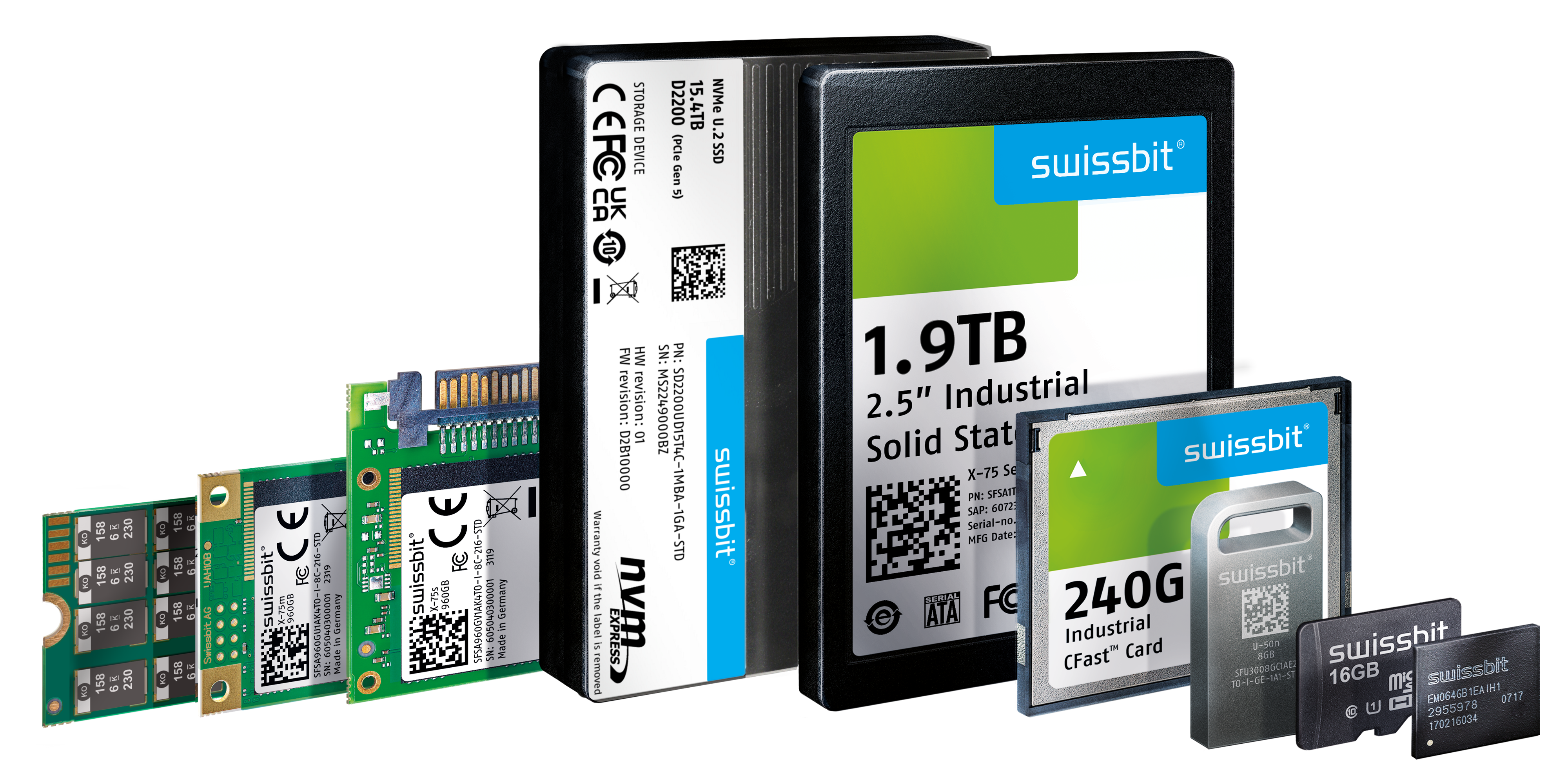
Swissbit industrial SSDs combine endurance, data integrity, life cycle control and long-term availability for demanding embedded and industrial applications. Choose from M.2 and compact BGA solutions to match your system’s mechanical and operational requirements.
Dependability Will Define the Next Phase of Edge AI
Edge AI is increasingly capable of interpreting complex situations and initiating physical actions. As intelligence moves closer to machines and production processes, infrastructure reliability becomes more important.
The most successful systems will not necessarily use the most powerful processor or largest model. They will combine intelligence with predictable operation, secure data handling, manageable lifecycle costs, and resilience in real industrial environments.
Compute performs the inference, but storage preserves the knowledge, evidence, and continuity that make industrial AI valuable. For the next generation of intelligent machines, the SSD is part of the AI strategy itself.
Convince yourself of our expertise

Stefan Zieboll is a Product Marketing Manager with over 10 years of experience in product management and marketing for technology-driven solutions. He brings strong domain expertise across Automation & Robotics, Energy & Smart Infrastructure, Healthcare, as well as Gaming & Signage, with a focus on translating complex technologies into clear customer value and driving market adoption.