Why a Fast SSD Can Still Be the Wrong SSD
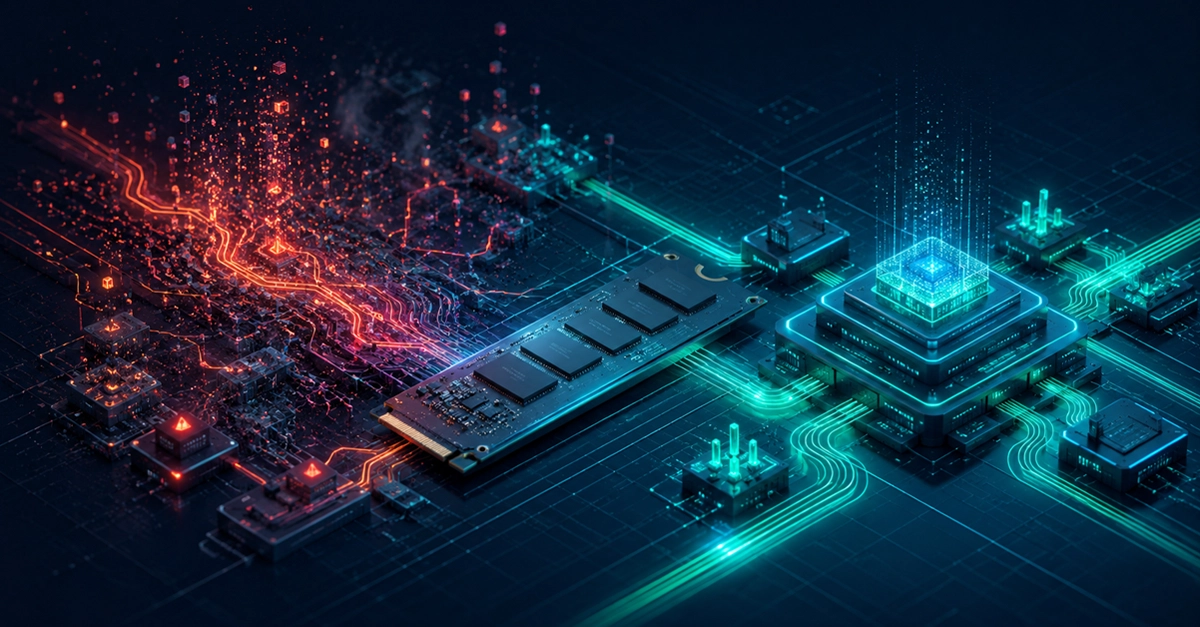

One of the most persistent misconceptions about SSD performance is that the highest benchmark number automatically identifies the best drive. In industrial and embedded systems, that assumption often leads to the wrong design decision.
Fresh-out-of-the-box sequential read and write speeds are easy to compare, which is why performance discussions often start there. Yet the more important questions emerge once the drive enters a real system. What happens when the cache is exhausted? How does the SSD behave when operating-system activity, application workloads, and logging processes compete for resources? Does latency remain predictable as the drive fills up or temperatures rise? What happens if power is lost during a write operation?
These are the factors that determine whether an SSD is simply fast on paper or genuinely fit for purpose.
Real Workloads Are Rarely Clean
Synthetic benchmarks have their place, but they measure performance under controlled conditions. Real-world industrial systems rarely operate in such an environment.
The operating system is active, logs are written continuously, applications generate and consume data, and multiple workloads compete for storage resources. An edge AI system may capture, process, and store images simultaneously. A networking appliance may need to handle traffic logs, databases, configuration data, and temporary files during sudden load spikes.
In these scenarios, peak throughput matters far less than predictable behavior. Some drives deliver impressive benchmark results only to drop sharply once their cache is exhausted. Average performance may still appear acceptable, but a single latency spike can delay image processing, reduce system responsiveness, or cause critical logging data to be missed.
That is why performance consistency is not a secondary consideration. System designers must evaluate sustained throughput, stable IOPS, tail latency, write amplification, thermal behavior, and mixed-workload performance. The key question is not simply, “How fast is this SSD?” but rather, “How reliably can it deliver the required performance under real operating conditions?”
The SSD Is Part of the System Architecture
Storage should never be selected in isolation. An SSD interacts with the processor, operating system, software stack, power architecture, thermal design, and the expected service life of the overall product.
As a result, a drive optimized for a controlled data-center environment may be poorly suited to an embedded system deployed in a control cabinet, vehicle, communications platform, or remote infrastructure installation. Airflow may be limited, temperatures may fluctuate significantly, and replacing a failed drive can be costly or operationally disruptive.
Industrial designers therefore assess far more than bandwidth. Endurance, data retention, power-loss behavior, security, thermal characteristics, lifecycle management, and long-term availability all influence whether a drive is suitable. These factors are connected: thermal throttling is also a performance-consistency issue; endurance determines whether the SSD can support the write profile throughout the system’s service life; and hardware power-loss protection can make the difference between a recoverable interruption and corrupted data.
Thermal behavior, for example, is ultimately a performance-consistency issue. As SSD temperatures rise, controllers may reduce performance to remain within safe operating limits. System designers therefore often balance maximum throughput against power consumption and heat dissipation to ensure predictable performance under sustained workloads.
Hardware-based power-loss protection can be the difference between a recoverable interruption and corrupted data. Without it, a dirty shutdown may require the drive to perform recovery operations during restart, significantly increasing boot times and, in extreme cases, causing the system to interpret the drive as unresponsive.

“In industrial systems, the best SSD is rarely the one that wins the benchmark - it is the one that continues to deliver predictable performance, day after day, year after year.”
What Shaped the A2000
When we developed the Swissbit A2000 platform, the goal was not simply to achieve the highest possible benchmark figures. Instead, we started by analyzing the workloads our customers run in the field.
We examined systems where the SSD serves as both boot drive and primary storage, as well as applications involving continuous logging, caching, image processing, networking, and RAID operations. Across these use cases, a common requirement emerged: customers needed high performance, but they also needed confidence that performance would remain available when workloads overlapped and operating conditions became challenging.
That requirement influenced the platform architecture from the outset. The A2000 family combines an eight-channel controller with external DRAM and a TLC-direct FTL architecture. The objective was not only to deliver high PCIe Gen4 throughput, but also to maintain sustained performance, low latency, and reduced dependence on short-lived cache effects.
Developing and maintaining our own firmware technology provides greater control over drive behavior, feature implementation, customization, validation, and long-term lifecycle support. For industrial customers, this matters because the SSD is not simply a replaceable component; it is a storage subsystem integrated into a product that may be expected to operate reliably for many years.
Real-world deployment conditions also shaped the platform's reliability and security features. Hardware power-loss protection helps safeguard data independently of the operating system. Versions with and without a heatsink enable adaptation to different thermal concepts. AES-256 encryption, TCG Opal 2.0, and secure boot support allow the SSD to become part of a broader system-security strategy rather than an isolated storage device.
Workload requirements also influence endurance selection. The A2000 is designed for demanding mixed-use applications that combine boot-drive and primary storage functions. For write-intensive environments such as continuous logging, caching, temporary storage, and RAID applications, the A2200 provides a higher-endurance option within the same platform family.


The A2000 series can be implemented in a range of mixed workloads from healthcare, data logging and edge AI applications. Also available with a heat sink, the SSD proves consistent performance across many use cases.
Performance Needs Context
As edge and industrial systems increasingly process data locally, PCIe performance becomes more important. But interface speed creates value only when the SSD can translate it into dependable application performance.
The more useful question is therefore not, “Which SSD is the fastest?” but “Which SSD provides the right performance profile for this system?” That profile includes bandwidth, but also predictable latency, sustained write behavior, endurance, data protection, thermal stability, security, and long-term availability.
This thinking shaped the A2000. It was designed not merely to be fast, but to remain predictable when conditions are no longer ideal. Because in industrial systems, the best SSD is rarely the one that wins the benchmark - it is the one that continues to deliver predictable performance, day after day, year after year.
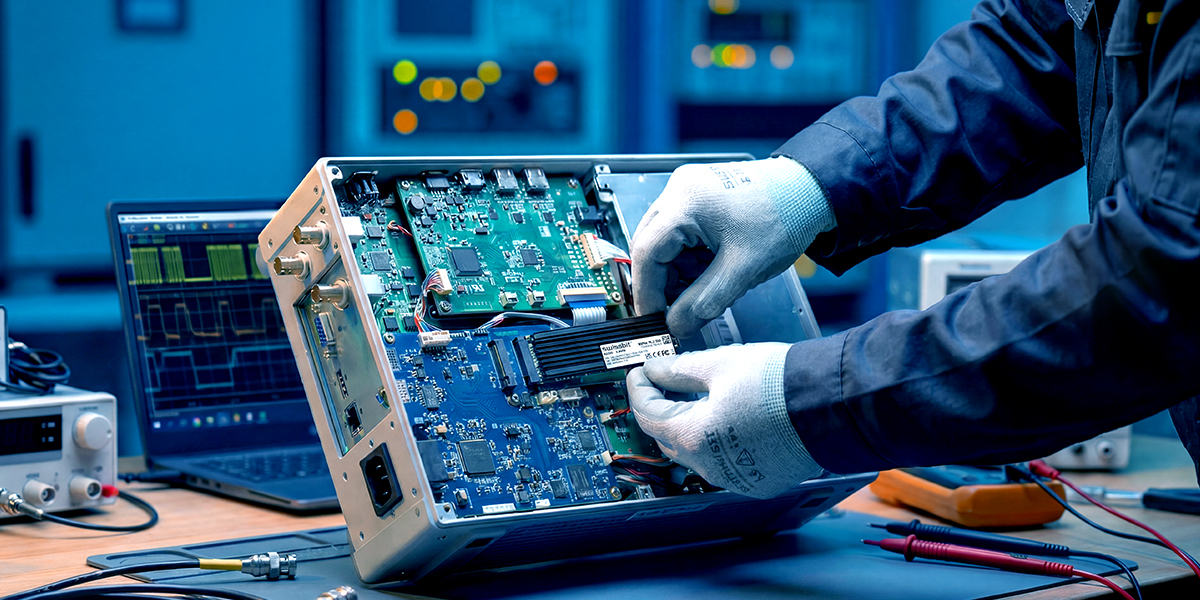
The Swissbit A2000 Series delivers sustained performance, predictable latency, power-loss protection, and industrial-grade endurance for demanding real-world workloads.
Convince yourself of our expertise.

Axel is Senior Product Manager for Storage Solutions. With over twenty years of experience in product management for microcontrollers, SSDs, and NAND storage solutions, he is responsible for the definition, development, marketing, and lifecycle management of highly reliable storage products at Swissbit, with a particular focus on NVMe solutions.