From checkout to audit trail: why storage matters in fiscal-ready POS systems
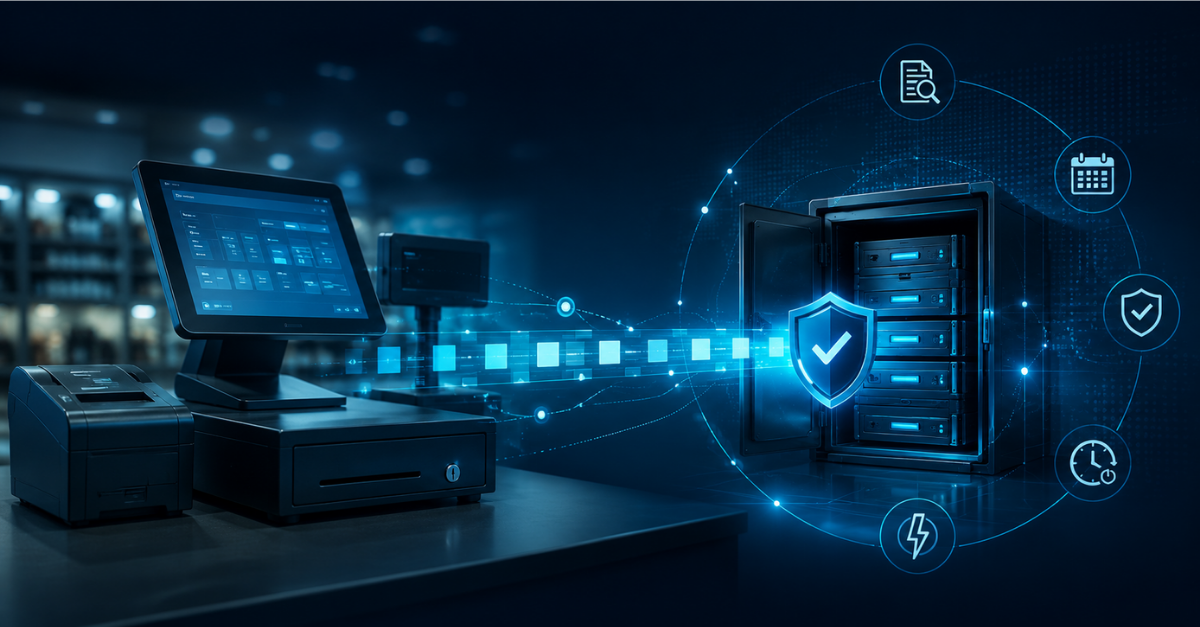

Fiscal compliance starts long before an audit. It begins at the POS, where every transaction must be recorded, protected, retained and made available in line with country-specific requirements. This article explains why secure, reliable storage is a critical foundation for fiscal-ready POS systems.
In my conversations with POS providers, retailers, hospitality businesses and system integrators, fiscal compliance is often discussed through the lens of regulation, certification and transaction signing. These are essential topics. But there is another layer that deserves just as much attention: the integrity and availability of the transaction data itself.
Every POS transaction creates data. In a fiscalized environment, that data may become part of an audit trail. It must be complete, protected against manipulation, retained for the required period and provided in a compliant format when needed.
That is why fiscal-ready POS systems need more than a compliant mechanism for signing or chaining transactions. They also need reliable storage, robust data handling and lifecycle-stable components that support daily operation over many years.
In other words: fiscal compliance does not begin when data is exported for an audit. It begins at checkout.
POS systems are becoming compliance-critical data systems
A modern POS system is no longer just a device or application for processing sales. In retail, hospitality and service environments, it is part of a compliance-critical data chain.
The POS captures the transaction.
The fiscalization layer protects it against manipulation.
The storage architecture preserves it.
The audit process depends on its availability and integrity.
If any part of this chain fails, the impact can go beyond operational inconvenience. Missing, corrupted or incomplete transaction data can create compliance risks, increase support effort and undermine audit readiness.
This is especially important in distributed environments such as supermarkets, convenience stores, quick-service restaurants, hotels, service counters, vending networks or mobility-related applications. These systems process high transaction volumes and often operate over long lifecycles with limited maintenance windows.
What makes POS data audit-ready?
Audit-ready POS data is transaction data that can be trusted, verified and provided when required. It is not enough for data to exist somewhere in the system. It must remain complete, readable, protected and traceable across the relevant retention period.
For fiscal-ready POS systems, audit-ready data typically depends on four connected capabilities:
Record
The POS system must capture transaction data completely and consistently.
Protect
Fiscalization mechanisms such as tamper-proof transaction signing help protect records against manipulation.
Store
Security-relevant and audit-relevant data must be stored reliably.
Provide
Data must be accessible for export, inspection or verification when required.
This is where storage becomes strategically important. If data cannot be retained or read reliably, even a well-designed signing process may not be enough to support long-term compliance.
Why standard storage can become a weak link
Standard storage is often selected based on capacity, price or availability. In fiscal-ready POS systems, these criteria are not sufficient.
POS environments create specific storage requirements. Transaction data is generated continuously. Devices may run for long hours every day. Power interruptions can occur. Systems may remain in the field for many years. Regulatory and audit requirements can outlast typical consumer hardware cycles.
A storage component that works well in a general-purpose application may not be suitable for a fiscalized POS environment.
The most relevant risks include:
Data corruption
Unexpected power loss or insufficient data protection mechanisms can compromise transaction records.
Insufficient endurance
Continuous transaction logging can create write patterns that standard storage was not designed to handle over long periods.
Poor retention characteristics
Audit-relevant data may need to remain available for years, even as systems age.
Unpredictable lifecycle changes
Uncontrolled component changes can create qualification, compatibility or certification issues.
Operational downtime
Storage failure at the POS can interrupt checkout processes and create service costs.
For POS providers and operators, storage is therefore not just an internal component. It is part of the reliability and compliance foundation.
Storage and transaction signing belong together
Fiscalization is often associated with transaction signing. That is understandable. Tamper-proof signing is central to creating trusted transaction records. But signing and storage should not be treated as separate topics.
A transaction can be signed correctly, but the system still needs to retain the relevant information reliably. Logs, records, exports and security-related data must remain available and consistent. This is particularly important when systems are operated across many locations or over long lifecycles.
The practical question is not only: Can the transaction be signed?
It is also: Can the signed transaction data be stored, retained and provided reliably throughout the POS lifecycle?
This is why fiscal-ready POS architectures should be designed around the complete data chain: transaction capture, signing, storage, retention and audit access fiscalization changes the role of the POS system.
The POS is not only where transactions happen. It becomes part of a compliance-critical data chain that must support secure recording, tamper-proof signing, data retention and audit access.
What storage requirements matter for fiscal-ready POS systems?
When evaluating storage for fiscalized POS environments, several criteria are especially important.
Endurance
POS systems often generate frequent transaction records, logs and operational data. Storage must be able to handle these workloads reliably over the full expected lifecycle.
For high-frequency retail and hospitality environments, endurance should not be an afterthought. It directly affects long-term system stability.
Power-fail robustness
Checkout environments are not always ideal IT environments. Power interruptions can happen. Storage must be designed to reduce the risk of data loss or corruption during unexpected shutdowns.
For fiscal applications, this matters because incomplete or corrupted data can affect audit trails.
Data retention
Fiscal and audit-relevant data may need to remain available for extended periods. Storage technology must support long-term readability and data integrity.
This is particularly relevant for systems that are deployed for many years and are expected to remain compliant throughout their operational life.
Lifecycle stability
POS systems are often qualified, certified and rolled out across many locations. Once deployed, changes to components or firmware can create complexity.
Long-term product availability, controlled changes and transparent lifecycle management help reduce redesign, requalification and service risk.
Security capabilities
Fiscal-ready systems often require secure data handling, protected firmware behavior and integration into broader security architectures. Storage should support the overall security concept rather than weaken it.
Supplier expertise
In fiscalized environments, technical support is not only about replacing a component. It is about understanding application requirements, certification context, lifecycle expectations and integration constraints.
A supplier with expertise in industrial storage and fiscal security can help reduce design and operational risk.

Storage is sometimes treated as a component-level purchasing decision. In fiscal-ready POS systems, it should be treated as an architecture decision.
Why this matters for retail, hospitality and service environments
Retail, hospitality and service businesses need fiscal compliance to work in daily operations. Checkout processes must remain fast and reliable. Transaction records must remain complete. Audit data must be available. Maintenance effort must stay manageable.
This creates a practical challenge: compliance cannot be designed only for ideal conditions. It must work in the real world.
A supermarket may process thousands of transactions per day.
A restaurant chain may operate many cloud-connected and local POS systems.
A hotel may combine front desk, hospitality, service billing and payment processes.
A service provider may operate distributed branch or counter environments.
All these environments need trustworthy transaction data.
A POS system that is fast but not auditable creates risk.
A POS system that is compliant but fragile does not scale.
A POS system that relies on unsuitable storage may become unreliable over time.
From component decision to architecture decision
Storage is sometimes treated as a component-level purchasing decision. In fiscal-ready POS systems, it should be treated as an architecture decision.
The choice affects:
system reliability
transaction data integrity
audit readiness
maintenance effort
lifecycle planning
certification stability
total cost of ownership
customer trust
For POS manufacturers and system integrators, this can become a differentiation factor. A POS system designed with reliable storage, secure transaction handling and long-term lifecycle stability gives merchants more confidence that compliance can be maintained in real-world operation.
For retailers and hospitality providers, the benefit is operational. Fewer failures, more predictable maintenance and more reliable audit data reduce risk across the POS estate.
How secure storage supports scalable fiscal compliance
As fiscalization becomes more complex and POS estates become more distributed, scalability matters. A single POS system can be managed manually. Hundreds or thousands of devices cannot.
Secure storage supports scalability by helping ensure that data remains consistent, available and protected across the deployed environment. It also supports more predictable lifecycle management, because component stability and supplier transparency reduce the need for repeated redesigns.
This is particularly relevant when fiscalization is implemented across different device generations, locations, connectivity profiles or deployment models. Whether a business uses local fiscal components, cloud-based fiscalization or hybrid models, storage remains part of the overall data integrity chain.
Questions to ask before choosing POS storage
Before selecting storage for a fiscal-ready POS system, decision-makers should ask:
What transaction and logging workloads will the POS system generate?
How long must audit-relevant data remain available?
What happens during unexpected power loss?
How will the storage perform after years of continuous operation?
Are component changes controlled and communicated?
Does the supplier support long product lifecycles?
Can the storage support security and compliance requirements?
How does the storage fit into the overall fiscalization architecture?
What service effort is created if storage fails in the field?
These questions help shift the discussion from unit cost to long-term risk reduction.
Conclusion: fiscal compliance depends on trustworthy data
Fiscal-ready POS systems depend on more than the ability to process transactions or generate receipts. They depend on trustworthy data.
That data must be captured, protected, stored, retained and provided reliably. Transaction signing is essential, but it is only one part of the complete data chain. Secure and lifecycle-stable storage is just as important for long-term auditability and operational resilience.
For POS providers, retailers, hospitality businesses and system integrators, the key is to design fiscal compliance into the architecture from the beginning. This means treating storage not as a commodity, but as part of the compliance foundation.
At Swissbit, our expertise in industrial storage, security and fiscalization helps customers build POS systems that are reliable, compliant and scalable.
Because reliable checkout starts with reliable data.
FAQ: POS data integrity, storage and fiscal compliance
POS compliance depends on data integrity because transaction records must remain complete, trustworthy and available for verification or audit. If data is corrupted, missing or unreadable, the POS system may not be able to provide reliable fiscal records.
Standard storage may not be designed for continuous transaction logging, long operating hours, power-fail scenarios, long-term data retention or controlled lifecycle requirements. These factors are important in fiscalized POS systems.
Audit-ready POS data is transaction data that can be verified, exported and provided in a required format when needed. It must be complete, protected against manipulation and available throughout the relevant retention period.
Transaction signing helps protect POS records against manipulation. Storage ensures that signed transaction data and audit-relevant information remain available and readable over time. Both are needed for reliable fiscal compliance.
Important storage features include endurance, power-fail robustness, long-term data retention, lifecycle stability, secure data handling and supplier support for long-running embedded or industrial applications.
POS systems often remain deployed for many years. Lifecycle-stable components reduce redesign, requalification, maintenance and certification risks during the operational life of the system.
Hardware TSE is often suitable when POS systems require local signing, offline operation, embedded integration, retrofit capability or strong control over local fiscal security components.
Secure storage helps ensure that transaction data, logs and audit-relevant records remain complete, readable and available. Transaction signing and storage should be considered together in fiscal-ready POS architectures.
POS systems often remain deployed for many years. Lifecycle-stable components reduce redesign, requalification, maintenance and certification risks during the operational life of the system.
Does that sound interesting to you? Convince yourself of our fiscalisation expertise and learn which product is best suited for your specific application. Just contact us.
Does that sound interesting to you?
Convince yourself of our expertise

Marco Leidl is VP Business Development Security Solutions at Swissbit. He spearheads business development in fiscalization and bolsters the solution and partner ecosystem. He supports customers and partners in identifying new opportunities in embedded IoT solutions. Follow him on LinkedIn.