Cloud-TSE, hardware TSE or hybrid: How to choose the right POS fiscalization architecture
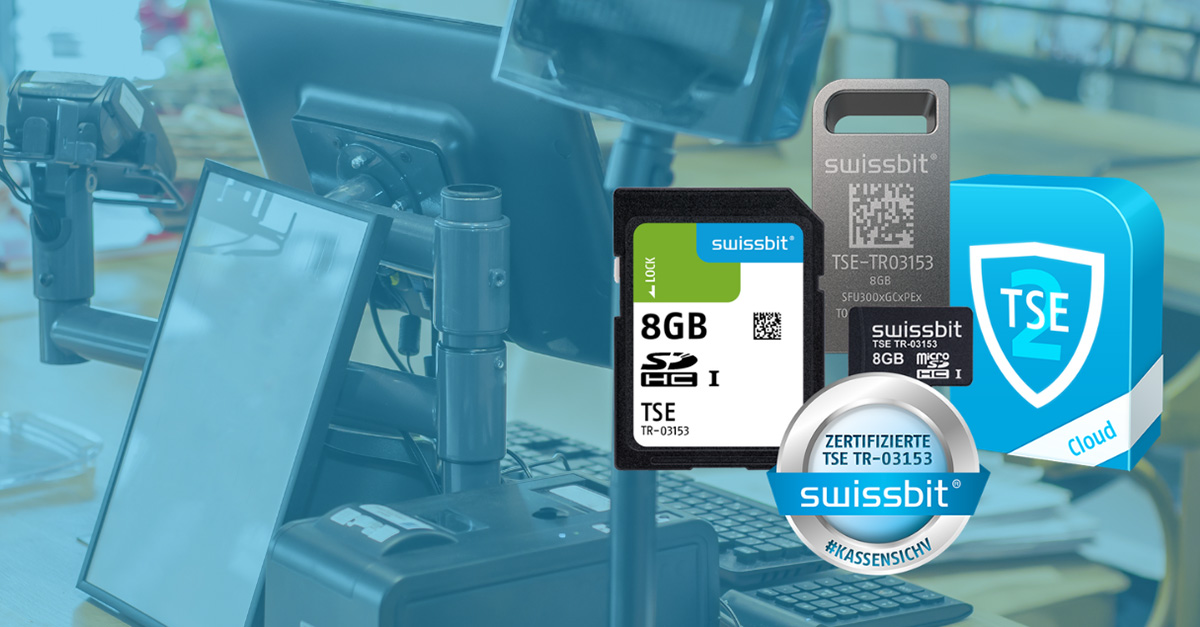
The decision between Cloud-TSE, hardware TSE and hybrid fiscalization is not only a compliance question. It is an architecture decision that affects connectivity, rollout, maintenance, scalability and long-term POS life cycle management.
In many conversations with POS providers, retailers, hospitality businesses and system integrators, one question comes up again and again: should fiscalization be handled locally with a hardware TSE, centrally through a Cloud-TSE, or through a hybrid model?
At first glance, this may sound like a technical detail. In practice, it is an architecture decision.
The right TSE strategy affects how a POS system is deployed, how easily it can be maintained, how well it scales across locations and how reliably fiscal compliance can be ensured over time. It also affects business continuity, audit readiness and life cycle planning.
There is no universal answer. A hardware TSE can be the right fit for local, embedded or offline-capable systems. A Cloud-TSE can be the better option for cloud-connected POS platforms and distributed retail or hospitality networks. A hybrid strategy can help businesses support different operating models without forcing every location into the same architecture.
My latest article provides a decision framework for choosing the right POS fiscalization architecture.
What is a TSE in POS fiscalization?
A TSE, or Technical Security System, is a certified security component used to protect electronic cash register transactions against manipulation. In Germany, TSE requirements are part of the KassenSichV framework.
In practical terms, a TSE helps create a tamper-evident audit trail. It signs transaction data, stores security-relevant information and supports the provision of audit-relevant data when required.
For POS providers and merchants, the TSE is not just a regulatory component. It is part of the architecture that determines how fiscal compliance is implemented and operated.
What is the difference between Cloud-TSE and hardware TSE?
A hardware TSE is a local security component integrated into or connected to the POS environment. It performs fiscal signing close to the cash register or POS terminal.
A Cloud-TSE provides the TSE function through a secure, centrally managed cloud service. Instead of deploying and maintaining local TSE hardware for every POS environment, transaction signing is handled through a cloud-based fiscalization service.
A hybrid TSE strategy combines both approaches. It can use Cloud-TSE where connectivity and operating models support it, while hardware TSE covers local, offline-capable, retrofit or embedded scenarios.
The core difference is not simply whether the solution is hardware-based or cloud-based. The real difference is how fiscalization is managed across the POS estate.
Why the TSE architecture decision matters
Fiscalization changes the role of the POS system. The POS is not only where transactions happen. It becomes part of a compliance-critical data chain that must support secure recording, tamper-proof signing, data retention and audit access.
The selected TSE architecture influences:
Rollout effort
Local hardware requirements
Connectivity dependency
Offline capability
Maintenance processes
Update management
Audit readiness
Life cycle planning
Total cost of ownership
Scalability across stores, restaurants or service locations
That is why the best question is not: Which TSE is better? The better question is: Which TSE architecture fits our POS operating model?
When hardware TSE is the right fit
A hardware TSE is often the right choice when local control, embedded integration or offline operation are important.
Because the security component is present locally, hardware TSE can support POS environments where transactions must continue even during network interruptions. It can also be suitable for dedicated POS terminals, cash register hardware, taximeters, vending systems or other embedded fiscal devices.
Hardware TSE is particularly relevant when the POS architecture is tightly controlled and the operator wants a clearly defined local trust anchor.
Typical hardware TSE scenarios
Offline-capable POS systems
If transactions must continue without a stable network connection, local signing can provide operational resilience.
Dedicated cash register hardware
Embedded systems can integrate hardware TSE directly into the device architecture.
Retrofit environments
Existing POS systems, taximeters or fiscal devices may require a local security component without a complete platform redesign.
Highly controlled deployments
Some businesses prefer local trust anchors and reduced dependency on external connectivity.
Long-life cycle systems
Hardware TSE can be suitable when certification, component behavior and system design need to remain predictable over many years.
When Cloud-TSE is the right fit
A Cloud-TSE is often the right choice when scalability, centralized management and reduced local service effort are priorities.
Instead of installing and maintaining local TSE hardware at every POS location, fiscal signing is provided through a secure cloud service. This can be especially attractive for POS software providers, cloud-connected POS platforms, large retail networks, restaurant chains and hospitality groups.
Cloud-TSE can help simplify rollout, reduce local hardware dependency and centralize compliance-related updates.
Typical Cloud-TSE scenarios
Large distributed POS networks
Retailers and hospitality groups with many locations can benefit from centralized fiscalization.
Cloud-connected POS systems
If POS systems already rely on cloud connectivity, Cloud-TSE can fit naturally into the architecture.
Software-based POS platforms
POS software providers can integrate fiscalization through a service model rather than supporting local hardware in every deployment.
Fast rollout requirements
Reducing local hardware installation can simplify deployment across many locations.
Centralized maintenance
Updates, service processes and compliance-related changes can be managed centrally.
Flexible operating models
Subscription-based models can align with growth, seasonal volumes or changing deployment structures.
When a hybrid TSE strategy makes sense
For many real-world POS environments, the best answer is not purely Cloud-TSE or purely hardware TSE. A hybrid strategy can provide flexibility while keeping compliance manageable.
A retailer might use Cloud-TSE in stores with reliable connectivity and hardware TSE in locations where offline operation is essential. A POS provider might support both models to serve different customer segments. A hospitality group might use Cloud-TSE for new deployments while keeping hardware TSE in existing systems until the next life cycle refresh.
Hybrid fiscalization can be especially useful when businesses have:
Mixed connectivity conditions
Legacy and new POS systems
Different store formats
Phased rollout plans
Multiple customer segments
Offline and online operating models
Different country or market requirements
A hybrid approach should not mean uncontrolled complexity. It should be designed as a clear architecture that defines when each model is used and how both models are managed.
Decision criterion 1: Connectivity
Connectivity is one of the most important factors in TSE architecture.
If POS systems operate in environments with reliable connectivity, Cloud-TSE can be efficient and scalable. If POS systems must continue operating independently during network outages, hardware TSE or hybrid models may be more suitable.
Key question:
Can fiscal signing depend on connectivity, or must the POS system sign transactions locally at all times?
Decision criterion 2: POS estate size
The number of POS systems strongly affects the operational model.
For a small number of devices, local hardware deployment may be manageable. For hundreds or thousands of POS systems, installation, replacement and maintenance of local components can become a significant operational burden.
Key question:
How many POS terminals, stores, restaurants or service locations need to be fiscalized now and in the future?
Decision criterion 3: Maintenance model
Fiscalization does not end after implementation. Certificates, updates, replacement processes and support workflows must be managed over time.
Hardware TSE requires local life cycle management. Cloud-TSE can centralize many maintenance activities. Hybrid models require clear operational rules.
Key question:
Should fiscalization be managed locally, centrally or through a trusted service provider?
Decision criterion 4: Offline operation
Some POS environments must keep operating regardless of connectivity. Others can rely on online processes with suitable availability concepts.
Offline requirements are especially relevant for retail locations with unstable networks, mobile or temporary sales environments, certain service applications, taximeters, vending systems or branch scenarios.
Key question:
What happens when connectivity is unavailable during business operations?
Decision criterion 5: Integration model
The right TSE strategy also depends on how the POS system is built.
A dedicated embedded system may be well suited for hardware TSE. A cloud-connected software platform may benefit from Cloud-TSE. A POS provider serving multiple customer types may need both.
Key question:
Is fiscalization part of a controlled device architecture, a software platform or both?
Decision criterion 6: Lifecycle planning
POS systems often remain in the field for many years. Fiscalization components must remain supportable throughout that life cycle.
This includes product availability, certification validity, update processes, component replacement, software compatibility and long-term service planning.
Key question:
How will the selected TSE architecture remain compliant and maintainable over the full POS life cycle?
Decision criterion 7: Total cost of ownership
Cloud-TSE and hardware TSE usually create different cost structures.
Hardware TSE may involve procurement, installation, logistics, replacement and local service costs. Cloud-TSE may shift costs toward subscription or usage-based models. Hybrid strategies require cost transparency across both models.
Key question:
Which model best matches the organization’s roll-out plan, service model and financial expectations?
Decision criterion 8: Customer experience
Fiscalization should not slow down or complicate the checkout process. Retail, hospitality and service environments depend on reliable customer-facing operations.
The selected TSE model should support fast transaction handling, stable POS operation and manageable service processes.
Key question:
Does the TSE architecture support reliable checkout operations in daily business?
How POS providers can avoid unnecessary complexity
For POS providers and system integrators, the TSE decision is also a platform strategy decision.
Supporting only one model may simplify development, but it may limit customer fit. Supporting too many models without a clear architecture can create complexity. The goal is to define a scalable fiscalization strategy that supports customer requirements without creating operational fragmentation.
POS providers should define:
Which customer segments require Cloud-TSE
Which scenarios require hardware TSE
When a hybrid model is appropriate
How on-boarding works
How audit exports are handled
How updates and certificates are managed
How support teams handle incidents
How costs are communicated
How future requirements can be integrated
A clear framework helps turn fiscalization from a regulatory reaction into a stable product capability.
Why this matters for retail, hospitality and service businesses
Retail, hospitality and service businesses do not want fiscalization to become another operational burden. They need compliance to work reliably in the background while checkout, service and customer experience remain smooth.
For these businesses, the right TSE architecture should help:
Reduce local maintenance effort
Support reliable transaction signing
Preserve audit-ready data
Simplify rollout across locations
Support online and offline operating models
Reduce life cycle risk
Improve long-term scalability
This is especially important for distributed organizations with many locations, different store formats or changing business models.
The role of Swissbit
Swissbit supports fiscalization with certified hardware TSE solutions, cloud-based fiscalization services and secure storage technologies for retail, hospitality and service environments. This combination matters because POS fiscalization is not only about signing. It also depends on reliable data handling, long-term auditability and lifecycle-stable operation.
For POS providers, retailers and hospitality businesses, the benefit is flexibility: fiscalization can be aligned with the operating model rather than forcing every deployment into the same structure.
Cloud-TSE, hardware TSE and hybrid models all have a role - when they are applied to the right architecture.
Conclusion: Choose the TSE model that fits the way your POS environment operates
Cloud-TSE, hardware TSE and hybrid fiscalization are not simply competing technologies. They are different architectural models for different operational realities.
Hardware TSE can be the right fit when local control, offline capability, retrofit integration or embedded system design are priorities.
Cloud-TSE can be the right fit when scalability, centralized management, reduced local hardware effort and fast rollout are priorities.
Hybrid fiscalization can be the right fit when different locations, systems or customer groups have different requirements.
For POS providers, retailers, hospitality businesses and system integrators, the most important step is to evaluate fiscalization as part of the complete POS architecture. The right TSE strategy should meet regulatory requirements, support reliable checkout operations, simplify maintenance and remain manageable throughout the system life cycle.
At Swissbit, we help customers build that foundation with certified TSE solutions, cloud-based fiscalization and secure storage technologies designed for reliable, compliant and scalable POS operation.
Because fiscal compliance works best when it fits the way your business actually runs.
FAQ: Cloud-TSE, hardware TSE and hybrid fiscalization
A TSE, or Technical Security System, is a certified security component used to protect electronic cash register transactions against manipulation. In Germany, TSE requirements are part of KassenSichV.
Cloud-TSE is a cloud-based fiscalization model where transaction signing is provided through a secure, centrally managed service instead of a local TSE device at the POS.
Hardware TSE is a local security component integrated into or connected to the POS system. It performs fiscal signing close to the cash register or POS terminal.
The main difference is where the TSE function is managed. Hardware TSE works locally at or near the POS system. Cloud-TSE provides fiscalization through a cloud service. Hardware TSE is often suitable for local control and offline operation, while Cloud-TSE is often suitable for centralized management and scalable deployments.
Hybrid fiscalization combines Cloud-TSE and hardware TSE. It can be useful when some locations or systems are cloud-connected while others require local signing or offline capability.
Cloud-TSE is often suitable for software-based POS platforms, large distributed POS networks, cloud-connected environments and organizations that want to reduce local hardware deployment and simplify centralized maintenance.
Hardware TSE is often suitable when POS systems require local signing, offline operation, embedded integration, retrofit capability or strong control over local fiscal security components.
If connectivity is reliable, Cloud-TSE can be efficient and scalable. If transactions must continue during network outages, hardware TSE or hybrid fiscalization may be more suitable.
TSE deployments involve certification, updates, replacement processes and long-term support. Lifecycle planning helps ensure that the fiscalization architecture remains compliant and maintainable over the full POS lifecycle.
Secure storage helps ensure that transaction data, logs and audit-relevant records remain complete, readable and available. Transaction signing and storage should be considered together in fiscal-ready POS architectures.
Does that sound interesting to you? Convince yourself of our fiscalization expertise and learn which product is best suited for your specific application. Just contact us.

Marco Leidl is VP Business Development Security Solutions at Swissbit. He spearheads business development in fiscalization and bolsters the solution and partner ecosystem. He supports customers and partners in identifying new opportunities in embedded IoT solutions. Follow him on LinkedIn.