Wie eine phishingresistente Authentifizierung kritische Infrastrukturen vor Cyberbedrohungen schützen kann
In meinem neuen Blogbeitrag befasse ich mich mit dem Sektor der kritischen Infrastrukturen. Dieser Sektor wird weltweit zunehmend zum Ziel von Cyberangriffen. Ich werde aufzeigen, wie eine phishing-resistente Authentifizierung diese Einrichtungen wirksam schützen kann. Abschließend stelle ich Ihnen die innovativen, technologisch fortschrittlichen Authentifizierungslösungen vor, die Swissbit zum Schutz digitaler Identitäten anbietet.
Einleitung
Die Zahl der Cyberangriffe auf kritische Infrastruktureinrichtungen nimmt weltweit zu. Laut dem European Repository of Cyber Incidents sind die gemeldeten Sicherheitsvorfälle in kritischen Infrastrukturen seit 2022 um 668 % gestiegen. Im vergangenen Jahr meldeten 56 % der weltweiten Gas-, Wind-, Wasser- und Solarversorger mindestens einen Cyberangriff. Darüber hinaus rechnen 54 % der Versorgungsunternehmen weltweit laut einer aktuellen Studie zur Widerstandsfähigkeit kritischer Infrastrukturen weltweit in den nächsten 12 Monaten mit einem Angriff auf kritische Infrastrukturen.
Auch in Deutschland stieg die Zahl der Cyberangriffe auf kritische Infrastrukturen im Jahr 2024 im Vergleich zu den Vorjahren um über 40 %. Insgesamt wurden dem Bundesamt für Sicherheit in der Informationstechnik (BSI) 769 Vorfälle gemeldet. Diese Cybersicherheitsvorfälle sind sowohl nichtstaatlichen als auch staatlichen Akteuren zuzuschreiben.
Was ist kritische Infrastruktur?
Das Büro der Vereinten Nationen für Katastrophenvorsorge (UNDRR) definiert kritische Infrastruktur wie folgt: „Die physischen Strukturen, Einrichtungen, Netzwerke und sonstigen Vermögenswerte, die für das soziale und wirtschaftliche Funktionieren einer Gemeinschaft oder Gesellschaft unverzichtbare Dienstleistungen erbringen.“
Das BSI definiert kritische Infrastruktur für Deutschland wie folgt: „Kritische Infrastrukturen (KRITIS) sind Organisationen oder Einrichtungen von erheblicher Bedeutung für die staatliche Gemeinschaft, deren Ausfall oder Beeinträchtigung zu dauerhaften Versorgungsengpässen, erheblichen Störungen der öffentlichen Sicherheit oder anderen dramatischen Folgen führen würde.“
Die folgenden Sektoren werden vom BSI ebenfalls als kritische Infrastruktur definiert:
- Energie
- Informationstechnologie und Telekommunikation
- Verkehr und Transport
- Gesundheit
- Medien und Kultur
- Wasser
- Lebensmittel
- Finanzen und Versicherungen
- Kommunale Abfallwirtschaft
- Regierung und Verwaltung
Wie die aufgeführten Sektoren zeigen, umfassen kritische Infrastrukturen nahezu alle Bereiche unseres gesellschaftlichen und individuellen Alltags. Sie betreffen die kontinuierliche Versorgung mit Energie, Nahrungsmitteln und Wasser sowie stabile IT- und Telekommunikationssysteme. Schließlich betreffen sie auch den Gesundheitssektor, in dem Krankenhäuser eine zentrale Rolle spielen. Die sich verschärfende Bedrohungslage macht Handlungsbedarf deutlich. In der Vergangenheit wurde weniger in die Abwehr von Cyberbedrohungen investiert, insbesondere im Bereich kritischer Infrastrukturen.
Ein aktueller Fall in Spanien und Portugal bestätigt dies ebenfalls. Auf weiten Teilen der Iberischen Halbinsel kam es zu einem Stromausfall, und relativ schnell war von einem Cyberangriff die Rede, der jedoch nicht bestätigt wurde. Umgekehrt sind die Sektoren zunehmend miteinander vernetzt, was der Vorstellung von klar voneinander getrennten Bereichen widerspricht. Dementsprechend zielen virtuelle Angreifer sowohl auf IoT-Geräte, die miteinander vernetzt sind, als auch auf OT-Systeme ab, die physische industrielle Prozesse steuern.
Regulatorische Anforderungen
Die regulatorischen Anforderungen wurden als Reaktion auf die zunehmende Häufigkeit und Verbreitung von Angriffen eingeführt. Ganz gleich, ob es sich um die NIS2-Richtlinie oder die CER-Richtlinie handelt, die übrigens darauf abzielt, die Widerstandsfähigkeit kritischer Einrichtungen – wie beispielsweise Infrastrukturen und Dienste, die für Gesellschaft und Wirtschaft unverzichtbar sind – gegenüber physischen Bedrohungen (Europa) zu stärken, um die US-amerikanische PPD-21 oder das japanische Grundgesetz zur Cybersicherheit: All diese regulatorischen Anforderungen und Normen zielen darauf ab, die Widerstandsfähigkeit gegen Cyberangriffe zu stärken. Und alle verlangen – entweder direkt oder indirekt – eine starke Multi-Faktor-Authentifizierung.
Erfahren Sie mehr: Cybersicherheit: EU-Vorschriften wie NIS2, RED, CRA und Data Act, die Unternehmen jetzt kennen sollten. Siehe auch: DORA: Wie Hardware-Authentifizierung Finanzunternehmen schützen kann
Der beste Weg, die Cyber-Resilienz kritischer Infrastrukturen zu stärken
Um kritische Infrastrukturen vor modernen Cyberbedrohungen zu schützen, sind eine effektive Unterstützung bei der Implementierung und eine robuste Hardwareausstattung von entscheidender Bedeutung. Swissbit kann diese Unterstützung bieten. Nachfolgend finden Sie einige wichtige Strategien:
- Führen Sie die passwortlose Authentifizierung ein. Wechseln Sie zu passwortunabhängigen Methoden wie FIDO2/Passkeys oder der zertifikatsbasierten Authentifizierung, da Passwörter anfällig für Phishing-Angriffe sind.
- Aktivieren Sie phishingresistente MFA (Multi-Faktor-Authentifizierung), um sicherzustellen, dass alle Benutzer geschützt sind.
- Verwenden Sie hardwarebasierte Passkeys (Roaming Authenticator). Setzen Sie moderne Authentifizierungslösungen wie FIDO-Sicherheitsschlüssel ein, beispielsweise den iShield Key 2, der hardwaregestützte Sicherheit nutzt, um kritische Ressourcen zu schützen.
- Implementieren Sie eine Zero-Trust-Architektur. Niemals vertrauen – immer überprüfen: Dieser Ansatz überprüft jede Zugriffsanfrage und minimiert so das Risiko unbefugter Zugriffe.
- Befähigen und schulen Sie Ihre Kollegen durch IT-Sicherheitsschulungen und -weiterbildungen. Beispielsweise müssen Mitarbeiter die Merkmale von Phishing-E-Mails erkennen, da diese nach wie vor die häufigste Form von Cyberangriffen darstellen.
- Stellen Sie sicher, dass Ihre Richtlinien für das digitale Zugangsmanagement und das physische Zugangsmanagement aufeinander abgestimmt sind. Kombinieren Sie beide Methoden auf einem Gerät wie dem iShieldKey.
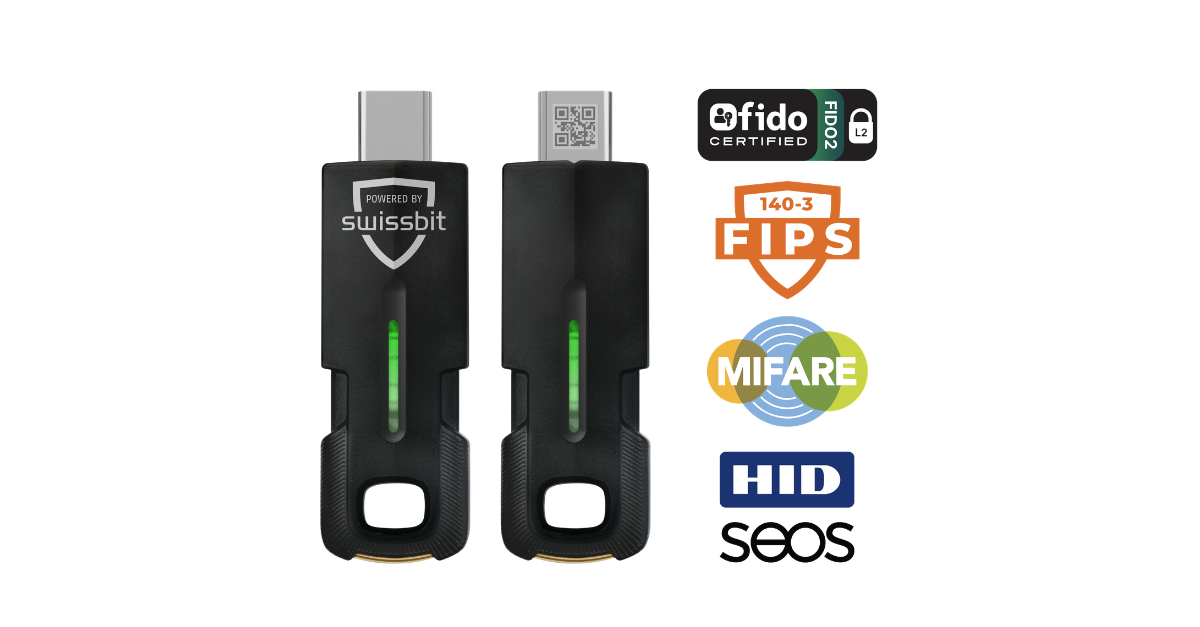
Phishing-resistente Authentifizierung für den digitalen und physischen Zugang: Der Swissbit iShield Key 2 vereint FIDO2-Passkeys, USB- und NFC-Konnektivität, flexible Multi-Faktor-Authentifizierung (MFA) sowie Zugangskontrolle in einem robusten Gerät. Entdecken Sie Sicherheit, die für Zero-Trust-Umgebungen entwickelt wurde.
Diese Strategien können die Sicherheit von Einrichtungen kritischer Infrastrukturen vor sich ständig weiterentwickelnden cyber- und physischen Bedrohungen erheblich verbessern. Die neuesten Zahlen aus dem Bericht zum Stand der passwortlosen Identitätssicherung zeigen, dass diese Strategien immer beliebter werden und nicht nur theoretischer Natur sind. Darin heißt es unter anderem:
- Zum ersten Mal in der Geschichte des Berichts gewinnen passwortlose und FIDO-basierte Authentifizierungsmethoden deutlich an Bedeutung: 46 % der Befragten nutzen mittlerweile diese sicheren Lösungen
- Diese Einführung phishing-resistenter Authentifizierungsmethoden markiert einen Paradigmenwechsel in der Cybersicherheit, wobei FIDO-Passkeys und Hardware-Schlüssel bis 2027 zum Goldstandard bei der Authentifizierung werden dürften
Von Swissbit angebotene Lösungen zur Hardware-Authentifizierung
Es ist besonders wichtig, Unternehmen, Organisationen und ihre Mitarbeiter widerstandsfähiger gegen externe Cyberangriffe zu machen, insbesondere im Bereich der kritischen Infrastruktur. Gleichzeitig müssen Daten und digitale Identitäten angemessen geschützt werden. Andernfalls können externe Akteure die Kontrolle über kritische Versorgungssysteme übernehmen. Um den Zugriff auf relevante Systeme und Daten zu verhindern, ist es unerlässlich, in Multi-Faktor-Authentifizierung (MFA) zu investieren. Langfristiges Ziel sollte es sein, eine robuste, phishingresistente Authentifizierungsinfrastruktur zu schaffen, die ohne Passwörter auskommt. Dies würde nicht nur die Cybersicherheit stärken, sondern auch die Kosteneffizienz der Sicherheitsarchitektur deutlich erhöhen.
Gut zu wissen: Phishing bleibt eine beständige Bedrohung für die Cybersicherheit. Laut dem Microsoft Cyber Digital Defense Report stiegen Phishing-Angriffe im Jahr 2023 um 58 %, mit geschätzten finanziellen Auswirkungen von 3,5 Milliarden US-Dollar im Jahr 2024.
Swissbit kann sowohl bei der Implementierung als auch bei der Hardware-Ausstattung effektiv beraten. Die folgenden Fakten unterstreichen einmal mehr die Position von Swissbit als Technologieführer im Bereich der Hardware-Authentifizierung mit der neuen iShield Key 2-Serie.
- Der neue iShield Key 2 MIFARE ist der weltweit erste FIDO2-Sicherheitsschlüssel, der digitalen und physischen Zugang vereint.
- Die iShield Key-Serie unterstützt alle weltweit relevanten Protokolle und Standards wie FIDO2, FIPS 140-3 Level 3 und MIFARE.
- Die iShield Key 2-Familie bildet die Grundlage für eine Zero-Trust-Strategie, unterstützt MFA und erfüllt regulatorische Anforderungen gemäß NIS2, CRA, DORA und der US-Verordnung zur Cybersicherheit.
Überzeugen Sie sich selbst von unserer Kompetenz.

Jan Quack worked as a Senior Solution Engineer at Swissbit, having joined the company in February 2025. He brought 20 years of professional experience, including 15 years specializing in PKI, IAM, FIDO, and Passwordless Authentication. In his role, he worked with organizations to enhance security and streamline authentication strategies, always focusing on practical, real-world solutions. With a passion for making complex topics accessible, Jan has shared insights through keynotes, workshops, and consultations, helping businesses adopt modern authentication practices in an ever-evolving digital landscape.