Cash register mandate 2027: why secure fiscalization belongs in POS strategy
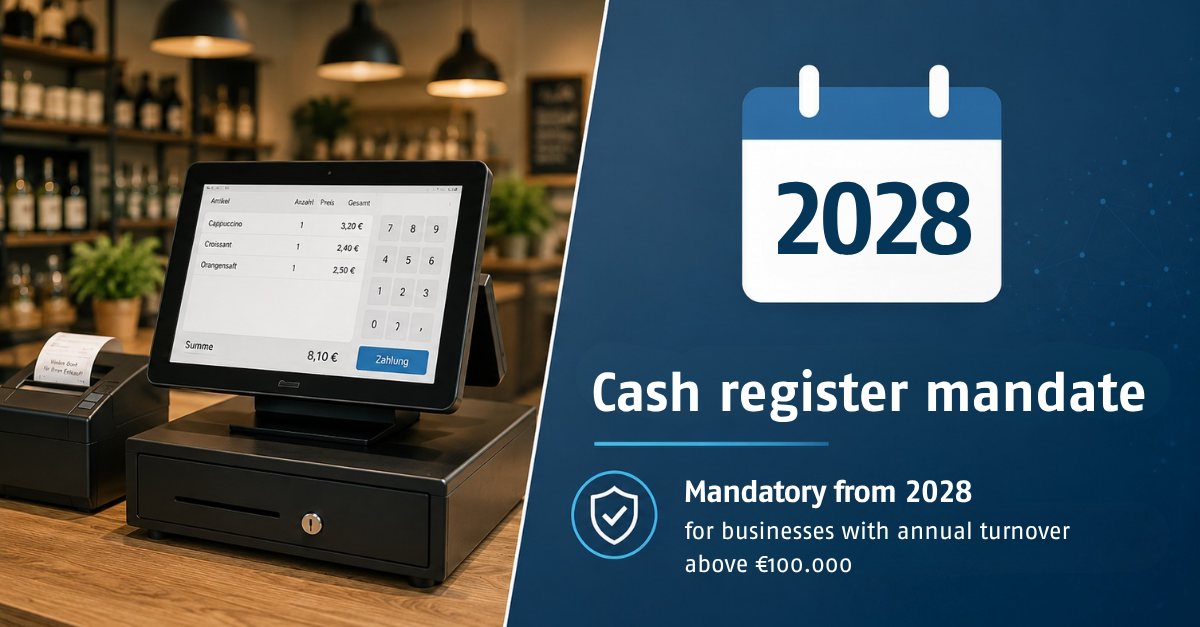

Key takeaway: Germany’s federal government is advancing a proposal for mandatory electronic cash registers for certain businesses from 2028. While the legal details are not final, POS operators, software providers and system integrators should already review certified technical security devices (TSEs), electronic reporting, data exports and operational continuity. Fiscalization should be designed into the POS architecture—not added at the end.
Germany’s planned cash register reform is no longer just an abstract debate. In September 2026, the federal cabinet approved a draft law aiming to improve the integrity of cash transaction records and promote digital receipts. The proposal would introduce an electronic cash register requirement from 1 January 2028 for businesses exceeding €100,000 in annual total turnover, with an exception in the draft for annual cash turnover below €12,000. The legislative process is still ongoing, and the final rules could differ.
For retailers, hospitality businesses, service providers and POS technology companies, the central challenge is practical: how can sales transactions remain reliable, tamper-evident and auditable without disrupting daily business? The answer requires a coordinated POS and fiscalization strategy.
What would Germany’s proposed cash register mandate change?
Under the current framework, Germany does not generally require every business to use an electronic cash register. Open cash boxes remain possible if applicable record-keeping obligations are met. The new draft would narrow that option for businesses within its scope, while allowing specified exceptions. The government is also proposing a shift away from mandatory paper receipts toward digital receipt provision, rather than simply introducing the previously discussed €30 threshold.
It is essential to distinguish the legislative proposal from requirements already in force. A possible future obligation to use electronic cash registers does not mean the TSE obligation itself would be new. Businesses that already use qualifying electronic recording systems have existing fiscalization duties.
What is a TSE and why is it already required?
A certified technical security device (Technische Sicherheitseinrichtung, TSE) protects transaction records created by in-scope electronic recording systems against undetected subsequent manipulation. In Germany, this requirement has existed since 2020 under the applicable tax and cash register security framework. Businesses must also consider exportability, procedural documentation and electronic system reporting. For a detailed explanation, see the Swissbit article on the German Cash Register Security Ordinance (KassenSichV).
The TSE is the technical security component, not a substitute for the complete legal and operational compliance process. POS providers and operators remain responsible for proper integration, records and reporting. Swissbit supplies certified fiscalization technology rather than acting as a tax authority or certification body.
Why the transition should start well before 2028
A POS rollout involves much more than ordering cash registers. Organizations must inventory stores and systems, map software versions, confirm TSE support, test data exports, prepare operating procedures and define contingency plans. New or replaced systems can also trigger electronic reporting obligations that should be integrated into implementation schedules.
The hardest issues often emerge during live operation: connectivity limitations, legacy interfaces, peak transaction volumes, end-of-life planning, replacements and employee training. For branch networks and platform providers, these challenges multiply across many locations and customers.
Which businesses and POS providers should prepare?
The proposed rules are especially relevant to cash-intensive businesses, including retailers, restaurants, cafés and mobile sellers. But eligibility depends on the wording of the final law, not on a business category alone. Service businesses, multi-site operators and mixed POS environments should assess whether their systems and turnover would fall within scope.
POS software providers, integrators and cash register manufacturers should also act early. Customers increasingly expect fiscalization to be technically integrated, certifiable where required, easy to maintain and sufficiently resilient for daily operations—not just compliant on paper.
Hardware TSE, cloud TSE or hybrid: which architecture fits?
There is no universally best TSE deployment model. A hardware TSE can suit individual registers, local installations and environments where reliable cloud connectivity is limited. Swissbit offers hardware options in USB, SD and microSD form factors; view the Swissbit secure fiscal systems overview for the available options.
A cloud-based TSE may be suitable for cloud POS platforms, centrally administered software and distributed branch networks. Swissbit Cloud TSE 2 connects through a REST API and is designed for centrally managed deployments. Hardware and cloud options can also coexist across a heterogeneous organization, if the integration and lifecycle model supports them.
A broader discussion of the trade-offs is available in the Swissbit comparison of cloud TSE, hardware TSE and hybrid POS fiscalization architectures.
| Evaluation factor | Hardware TSE | Cloud TSE |
|---|---|---|
Typical operating model | Local or register-connected component | Service/API-based integration |
Connectivity | Suitable where cloud connectivity is undesirable or intermittent; implementation-dependent | Requires appropriate service connectivity and defined outage handling |
Rollout | Physical device provisioning and replacement | Centralized rollout and service lifecycle |
Integration | Device interfaces and POS integration | API and platform integration |
Operational focus | Device lifecycle, local fallback, inventory | Connectivity, service availability, tenant/endpoint administration |
Decision rule | Choose based on verified POS requirements, not form factor alone | Choose based on verified POS requirements, not deployment fashion |
A practical fiscalization readiness checklist
Companies should define their target architecture before choosing individual components. The following eight-point checklist supports internal workshops with IT, tax, finance, store operations and POS vendors:
Inventory all cash registers, locations and POS software versions.
Identify already deployed TSEs, certification status and replacement cycles.
Check DSFinV-K export, retention, archive and procedural documentation.
Verify applicable electronic reporting obligations and filing responsibility.
Evaluate hardware TSE, cloud TSE and mixed deployment options.
Test offline behavior, outages, service recovery and transaction integrity.
Plan staff training, support, device replacement and rollout governance.
Track legislative updates and revalidate scope before committing to a deadline.
Digital receipts do not eliminate transaction controls
The government’s September 2026 draft envisages a shift from paper receipts toward digital receipt provision from 2028. This is different from the earlier proposal to exempt transactions of up to €30 from the receipt obligation. The final statutory wording must be checked before businesses change their receipt process.
Regardless of the output format, transaction data must be recorded and protected as required. Digital receipts, reporting, tamper-evident records and audit exports are interconnected design questions, not independent checkout features.
Conclusion: make fiscalization part of POS strategy
Germany’s planned electronic cash register mandate is a strong reason to revisit fiscalization architecture now, even though the law remains under development. Businesses should not wait until procurement deadlines force rushed decisions. They should first establish which systems are affected, what data must be available for audits and which TSE approach fits the operational environment.
Swissbit supports this work with hardware-based and cloud-based TSE technology for different POS scenarios. To explore component and integration options, see the [KIRBY LINK L5] Swissbit POS fiscalization portfolio or [KIRBY LINK L6] contact Swissbit’s fiscalization experts.
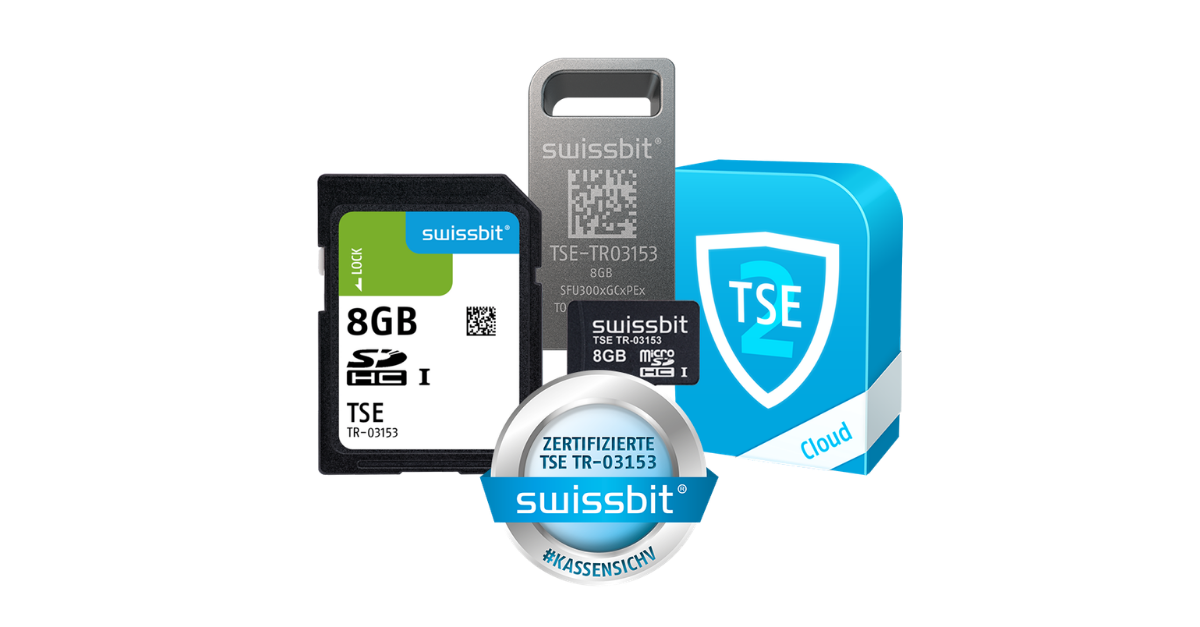
Swissbit TSE fiscal solutions combine secure, legally compliant transaction recording with simple integration, reliable operation, and long-term availability. Designed for POS systems, cash registers, and embedded applications, they make fiscalization dependable, efficient, and ready for real-world use.
Frequently asked questions about the planned cash register mandate
Not yet. On 23 September 2026, the federal cabinet approved a draft law. The legislative process may change the effective date, scope and exceptions before enactment.
The federal government’s September 2026 draft proposes 1 January 2028. Earlier 2027 references reflect an older proposal and should not be presented as the current draft timeline.
The draft generally targets businesses with more than €100,000 in annual total turnover and provides an exception for those with less than €12,000 in annual cash turnover. Exact eligibility depends on the final law.
Qualifying electronic recording systems have generally been subject to certified TSE requirements since 2020. A proposed obligation to use an electronic register is separate from these existing protections.
A hardware TSE is integrated locally or at the device; a cloud TSE connects through a service interface. The appropriate choice depends on POS design, connectivity, integration, lifecycle and availability requirements.
The September 2026 government draft envisages digital receipt provision replacing a general mandatory paper receipt approach from 2028. Businesses should verify the enacted text before altering their processes.
DSFinV-K is the standardized digital interface for tax-audit exports from cash register systems. Electronic reporting is a separate notification process for relevant recording systems; operators must determine which obligations apply.
Start with an inventory of locations, POS systems and TSE integrations, then validate reporting, export, archiving and fallback workflows. Compare cloud and hardware TSE options before procurement or migration.
Our experts are happy to help.

Marco Leidl is VP Business Development Security Solutions at Swissbit. He spearheads business development in fiscalization and bolsters the solution and partner ecosystem. He supports customers and partners in identifying new opportunities in embedded IoT solutions. Follow him on LinkedIn.