Cash register mandate 2027: why secure fiscalization belongs in POS strategy
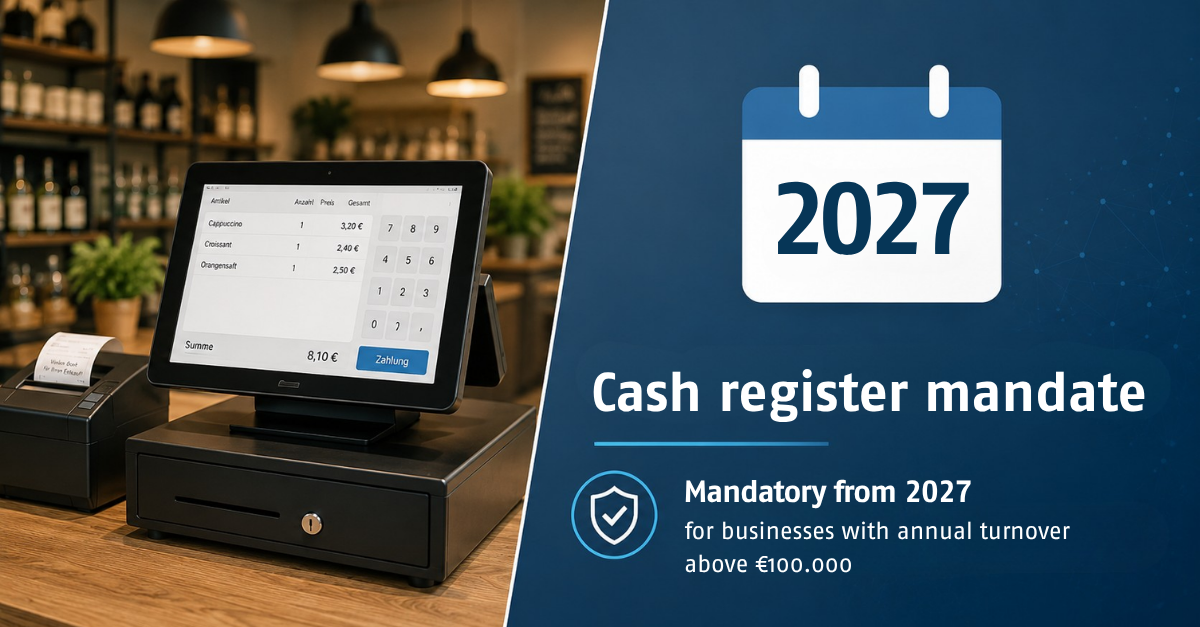
Germany is considering a mandatory electronic cash register requirement for businesses with annual revenues above €100,000 from 2027. The details are not final yet. But for retailers, hospitality businesses, service providers and POS companies, now is the right time to review cash register systems, TSE integration and audit-readiness.
Germany is once again talking about cash registers. This time, the discussion is not only about receipts or open cash boxes. It is about a more fundamental question: how can cash transactions be recorded in a way that remains practical for businesses while being tamper-proof, traceable and ready for audit?
According to current plans by the German Federal Ministry of Finance, businesses with annual revenues of more than €100,000 could be required to use electronic, tamper-proof cash registers from January 2027. At the same time, the obligation to issue receipts for smaller amounts of up to €30 could be relaxed.
For now, this is not yet enacted law. Thresholds, deadlines and detailed requirements may still change during the legislative process. But the direction is clear: Germany is continuing to digitalize the recording of cash register transactions.
For companies that still use open cash boxes, or operate POS environments that have grown over time, a possible cash register mandate would be more than a new regulatory requirement. It would affect devices, software, TSE integration, data exports, reporting obligations, procedural documentation, staff training and daily operations.
In other words, this is not only about compliance. It is about building a cash register architecture that remains secure, available and auditable over the long term.
What could change
Today, Germany does not have a general obligation to use an electronic cash register. Businesses may still use an open cash box, provided they meet the applicable record-keeping requirements.
This could change from 2027, at least for companies above the planned revenue threshold. Affected businesses would have to use electronic cash register systems that are protected against manipulation. Non-compliance could lead to fines, and the use or distribution of manipulation software is expected to come under closer scrutiny.
At the same time, the government is considering a partial relaxation of the receipt obligation. For transactions of up to €30, there would no longer be a tax-related obligation to issue a receipt. This could make a noticeable difference in everyday operations, especially in bakeries, cafés, snack bars, small services or mobile sales environments with many low-value transactions.
But less paper does not mean less accountability. Even if a receipt no longer has to be issued in certain cases, the transaction still has to be recorded correctly, protected properly and remain traceable in the event of an audit.
The TSE requirement is not new
A possible cash register mandate from 2027 would be new. The obligation to protect electronic recording systems with a certified technical security device, or TSE, has already been in place since 2020.
The TSE acts as the technical trust anchor in the cash register system. It protects transactions against subsequent manipulation and ensures that relevant data remains traceable for audits. This matters especially during cash register inspections and tax audits, where tax authorities need to verify that business transactions have been recorded completely, correctly and without later manipulation.
For businesses already using electronic cash registers with a certified TSE, the technical foundation is in place. For companies still relying on open cash boxes, the question is broader: which POS and TSE architecture fits the business model?
The answer is rarely just “hardware” or “cloud”. It involves locations, connectivity, integration effort, fallback scenarios, data exports, life cycle management and auditability.
Swissbit has been active in this field for several years as a provider of certified fiscalization solutions. Its portfolio includes hardware-based TSEs in formats such as USB, SD and microSD, as well as cloud-based solutions for modern, distributed POS scenarios. This breadth matters because real-world POS environments differ widely — from single terminals to networked branch operations.
Why 2027 is closer than it sounds
On paper, January 2027 may still seem far away. In practice, a cash register transition can quickly become complex.
The first question is which systems are actually affected. Which locations are in scope? Which cash registers are in use? Which devices are already protected by a TSE? Which software versions are running? Which data exports are available? And how are archiving, procedural documentation and reporting obligations organized?
There is also the electronic reporting obligation for cash register systems. The reporting procedure has been available since 2025. For electronic recording systems purchased from July 1, 2025 onward, the reporting deadline is generally one month after purchase. Any company introducing new systems or replacing existing ones as part of a possible cash register mandate should include this process from the beginning.
Experience shows that procurement is not usually the hardest part. The real challenge lies in clean implementation during ongoing operations. Interfaces need to be tested, employees trained, fallback processes defined and responsibilities clarified. In branch networks or for POS providers serving many end customers, this quickly becomes a project involving IT, finance, tax advisers, operations and external partners.
It is not only traditional retailers who should pay attention
Public debate often focuses on bakeries, restaurants, cafés, snack bars or small retailers. That makes sense, because cash payments and open cash boxes are particularly visible in these environments.
But the implications go further. The planned mandate could affect all businesses above the final revenue threshold that do not yet use an electronic, TSE-protected cash register solution. Service providers, mobile sales models, branch operations and mixed POS environments should also look at the topic early.
For POS software providers, system integrators and cash register manufacturers, the development is just as relevant. Their customers will expect solutions that are not only compliant on paper, but can also be integrated, operated and documented reliably.
This is where fiscalization proves itself in daily practice. A solution must be certified. But it also has to fit real POS processes: stationary or mobile, online or temporarily offline, locally installed or cloud-based, individually operated or centrally managed.
The real challenge is operation
Buying a new cash register is the visible part. The more important long-term question is: how can the complete solution remain secure, available and audit-ready over several years?
Many companies do not operate a uniform POS landscape. Classic terminals, mobile devices, self-checkout, soft POS, inventory systems, payment services and archiving often interact closely. Any change to the cash register environment can affect several processes at once.
That is why the TSE strategy should not be decided at the end of a cash register project. It belongs at the beginning. It influences integration, rollout, maintenance, replacement concepts, certificate and product lifecycles, data exports and outage scenarios.
A certified TSE is the foundation. In daily operations, the additional question is whether the solution fits the existing infrastructure. For local installations, a hardware TSE can be the right choice. For distributed or cloud-based POS environments, a cloud TSE can simplify operations. In many companies, a hybrid strategy may be the most realistic answer.
Swissbit addresses these different scenarios with hardware and cloud TSE solutions. The value is not in offering one answer for every cash register environment. The value is in enabling fiscalization to match the actual POS reality.
Hardware TSE, cloud TSE or both?
There is no TSE architecture that is right for every company.
A hardware-based TSE is particularly suitable for stationary systems, local installations, existing cash register environments or scenarios where continuous cloud connectivity is not desired or not always available. It is operated directly at the device or within the local infrastructure and can reliably protect existing POS systems.
Swissbit has long-standing experience in this area. Its hardware TSE is already established in the market, and with Hardware TSE 2, the next generation has been certified by the BSI and designed for long-term integration in the German cash register ecosystem. For POS manufacturers and integrators, predictable migration and integration are especially important.
A cloud TSE, on the other hand, can offer advantages where cash register systems are distributed, cloud-based or centrally managed. Swissbit Cloud TSE 2 is a cloud-based solution without a local hardware component. It connects to cash register systems via REST API and supports automated rollouts with zero-touch onboarding.
Most importantly from a trust perspective, Swissbit Cloud TSE 2 is certified according to BSI TR-03153-1, version 1.1.1. This is not just a marketing detail. It is a proof point. Businesses, POS providers and integrators need to rely on the technical security device not only working in daily operations, but also remaining compliant and traceable in an audit scenario.
For larger POS landscapes, a centrally managed TSE-as-a-service architecture can simplify rollout, reduce local hardware and cover different cash register scenarios more efficiently. At the same time, a hardware TSE remains the right choice for many environments. The decisive question is not which technology sounds more modern. The decisive question is which architecture fits the operation.
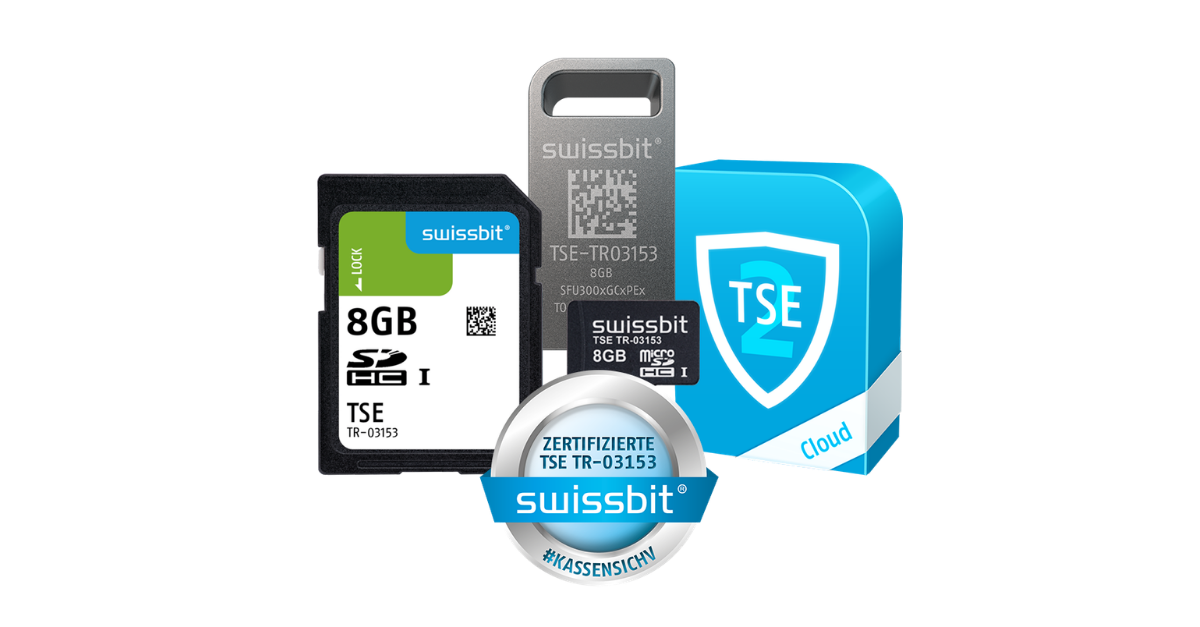
Swissbit TSE fiscal solutions combine secure, legally compliant transaction recording with simple integration, reliable operation, and long-term availability. Designed for POS systems, cash registers, and embedded applications, they make fiscalization dependable, efficient, and ready for real-world use.
What businesses should review now
Even though the cash register mandate has not yet been finally passed, businesses can already take useful steps.
The first step is a clear inventory. Which cash registers are in use? Which locations and business premises are affected? Which systems are already protected by a TSE? Which data exports are available? Is the procedural documentation up to date? Have reportable systems been registered correctly?
The next step is the target architecture. A single location with stable local infrastructure has different needs than a branch network, a mobile hospitality business or a POS provider serving many end customers. What matters is that the solution does not only meet the minimum requirements, but also works reliably in daily operations.
Key points to review include:
TSE integration and certification status
DSFinV-K export and archiving processes
electronic cash register reporting
roles and responsibilities
outage and fallback processes
rollout and replacement concepts
employee training
procedural documentation
suitability of hardware TSE, cloud TSE or hybrid approaches
The earlier these points are clarified, the lower the risk of rushed decisions shortly before a possible deadline.
Receipt obligation: less paper, but not less responsibility
The planned exemption for receipts up to €30 would be welcomed by many businesses. For small amounts in particular, today’s receipt process often creates effort with limited practical value.
Still, the core principle of fiscalization remains unchanged: transactions must be recorded correctly, completely and in a tamper-proof way. Receipt issuance is only the visible part of the process. Behind it are signing, storage, export capability and auditability.
The good news is that receipts do not have to be paper. Digital receipts are already possible today. Businesses that consider cash register modernization, digital receipts and TSE strategy together can reduce paper, simplify processes and improve audit-readiness.
The prerequisite is an architecture that does not only look at the receipt, but at the entire data and evidence process behind the transaction.
Conclusion: the cash register mandate is a signal
Whether the 2027 cash register mandate will be introduced exactly as currently planned remains to be seen. But the direction is clear: cash register data is becoming more digital, more tamper-proof and more verifiable.
For businesses, this is a good opportunity to look at POS infrastructure from a broader perspective than compliance alone. The better question is not: what do we need to do to meet the minimum legal requirement? The better question is: which cash register and TSE architecture will support our business reliably over the next few years?
Swissbit can provide orientation here because fiscalization has to work in different real-world environments: local, cloud-based, networked or hybrid. Certified TSE solutions, experience with POS integrations and a portfolio covering both hardware and cloud TSEs give businesses and POS providers a solid basis for developing secure and auditable cash register environments.
Businesses reviewing their POS environments with 2027 in mind should therefore consider the TSE strategy early — not as an isolated component, but as part of a secure, scalable and auditable cash register architecture.
Does that sound interesting to you? Convince yourself of our fiscalization expertise and learn which product is best suited for your specific application. Just contact us.
No. As of June 2026, the planned mandate is still a political proposal or draft and not yet enacted law. Details such as thresholds, exceptions and deadlines may still change during the legislative process.
According to the current proposal, businesses with annual revenues of more than €100,000 would be affected. It is still unclear how exactly the final regulation will be structured and whether there will be exceptions or further distinctions.
Not necessarily for all businesses. Open cash boxes are currently still permitted if the applicable record-keeping requirements are met. A cash register mandate would likely restrict this option for businesses above the final revenue threshold.
No. Electronic recording systems in Germany have had to be protected by a certified technical security device since 2020. What would be new is the obligation for certain businesses to use an electronic cash register in the first place.
Swissbit provides certified fiscalization solutions for electronic cash register systems, including hardware-based TSEs and cloud-based TSE solutions. This matters because different POS landscapes require different operating models, from local cash registers and branch structures to cloud-based POS environments.
BSI certification is a central proof point that a technical security device meets the relevant requirements for tamper-proof recording. For businesses and POS providers, this is important because the TSE must not only work technically, but also remain traceable and compliant in an audit scenario.
Swissbit Cloud TSE 2 is particularly suitable for cloud-based cash register systems, soft POS scenarios, distributed branch structures and POS providers that prefer central TSE integration via API. Its certification according to BSI TR-03153-1, version 1.1.1 is an important trust signal.
The current proposal includes a relaxation of the receipt obligation. For transactions of up to €30, businesses would no longer be required to issue a receipt for tax purposes. However, this would not remove the obligation to record and secure the transaction correctly.
Electronic recording systems must be reported to the German tax authorities via the electronic reporting procedure. For systems purchased from July 1, 2025 onward, the reporting deadline is generally one month after purchase. This requirement should be considered from the beginning of any new cash register project.
Our experts are happy to help.

Marco Leidl is VP Business Development Security Solutions at Swissbit. He spearheads business development in fiscalization and bolsters the solution and partner ecosystem. He supports customers and partners in identifying new opportunities in embedded IoT solutions. Follow him on LinkedIn.