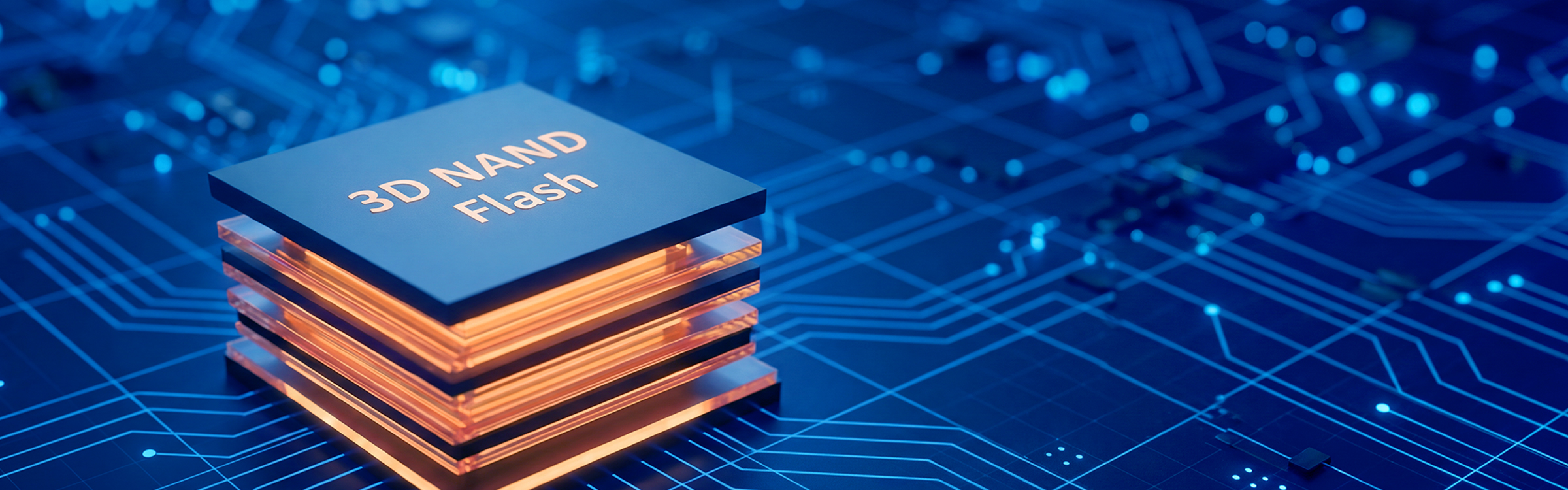
Industrial Storage Technology for Demanding Applications
NAND Flash and SSD technology engineered for extreme conditions, continuous operation, and 10+ year lifecycles
Industrial applications demand storage that operates reliably for 10+ years. Your systems run continuously in temperature extremes, log data 24/7, and cannot accept component obsolescence mid-lifecycle. Consumer storage cannot meet these requirements.
These demands require different technology. Not faster or cheaper storage, but more reliable storage. Not maximum capacity, but predictable endurance. Not latest-generation components, but long-term availability.
Swissbit combines NAND selection, firmware development, and System-in-Package manufacturing in Berlin. We engineer industrial storage solutions where others assemble off-the-shelf parts.
NAND Flash from SLC to 3D TLC with pSLC mode
SSD technology optimized for industrial workloads
Extended temperature range: -40°C to +85°C
European manufacturing with traceable supply chain
NAND Flash Technology: Built for Industrial Endurance
Industrial NAND flash must survive temperature extremes, deliver predictable endurance, and remain available throughout decade-long equipment lifecycles. NAND technology evolved from planar SLC through current 3D generations, balancing capacity, cost, and reliability. Industrial applications prioritize stability over density, endurance over cost, temperature tolerance over performance.
Firmware Technology: Intelligent Storage Management
Firmware intelligence determines whether storage meets theoretical endurance or fails prematurely. Flash translation, wear leveling, garbage collection, and data integrity algorithms must operate across temperature extremes and usage patterns that consumer firmware never encounters. Industrial firmware optimizes for continuous operation, predictable workloads, and power-fail resilience.
SSD Controller Architecture: Security and Reliability
Critical applications face cyber threats requiring storage protection on all layers. Hardware-anchored security protects against data inspection, boot process manipulation, and unauthorized firmware modification. Controller-level cryptographic acceleration, tamper detection, and secure boot chains provide protection that software-only solutions cannot achieve. This defends data even when host systems are compromised.
Manufacturing Technology: Ruggedized for Demanding Environments
Industrial storage must survive harsh environments: temperature cycling, shock, vibration, moisture, dust, and electromagnetic interference. Ruggedization requires control over the entire assembly process, from component selection through final testing. Manufacturing integration enables optimization for mechanical robustness, electrical resilience, and environmental protection that standard assembly processes cannot achieve.
Why Swissbit for Industrial Storage Technology?
Swissbit storage products are manufactured in Berlin, Germany. Swissbit operates one of Europe's few remaining semiconductor packaging facilities, implementing System-in-Package (SiP) technology that assembles NAND flash, controllers, and components into finished industrial storage products. European manufacturing provides supply chain transparency critical for automotive storage solutions, medical device storage, and defense applications where component provenance must be verifiable.
Swissbit has developed NAND flash and SSD solutions since 2001. Our engineering experience spans planar SLC through current 3D NAND generations, from USB drives through PCIe Gen 5 SSDs. We've designed storage for applications from -40°C industrial automation to +105°C automotive environments.
Swissbit's vertical integration—hardware development, firmware engineering, SiP manufacturing, and testing—enables customization for applications requiring specific endurance profiles, temperature ranges, or security features that standard products cannot address.
Frequently Asked Questions
Choose SLC for extreme endurance exceeding 100,000 write cycles or requiring maximum temperature tolerance. Select pSLC mode for applications requiring 10,000-3050,000 cycles where cost matters but consumer TLC endurance is insufficient. Use industrial-grade TLC for read-intensive applications or write workloads under 3,000 cycles where capacity and cost matter more than extreme endurance.
Calculate daily write volume in GB, multiply by deployment years and 365 days, then add 50% margin. This total represents required TBW. Compare against NAND endurance: SLC provides approximately 100x raw capacity in TBW, pSLC provides 10-25x, TLC provides 3-5x depending on overprovisioning and workload patterns.
Commercial-grade (0°C to +70°C) suffices for climate-controlled environments. Extended-grade (-25°C to +85°C) handles outdoor installations in moderate climates. Industrial-grade (-40°C to +85°C) is required for extreme climates, automotive under-hood applications, and industrial equipment in unheated facilities.
No. Industrial storage uses standard interfaces—SATA, PCIe/NVMe, eMMC, SD/microSD. The difference lies in NAND quality, firmware optimization, component selection, and validation testing. Industrial storage survives conditions that destroy consumer products using the same interfaces.
Power-fail protection circuits monitor supply voltage. When voltage drops below thresholds, capacitors provide energy for the controller to complete in-flight NAND operations, flush write caches, and update metadata to consistent states. The process takes milliseconds but prevents corruption that would otherwise require filesystem recovery or data loss.
Write amplification occurs when internal NAND writes exceed host write commands due to garbage collection, wear leveling, and FTL overhead. A 3x write amplification factor means every 1 GB written by the host causes 3 GB of internal NAND writes, reducing effective endurance by 3x. Industrial SSDs optimize FTL and overprovisioning to minimize write amplification.
Resources
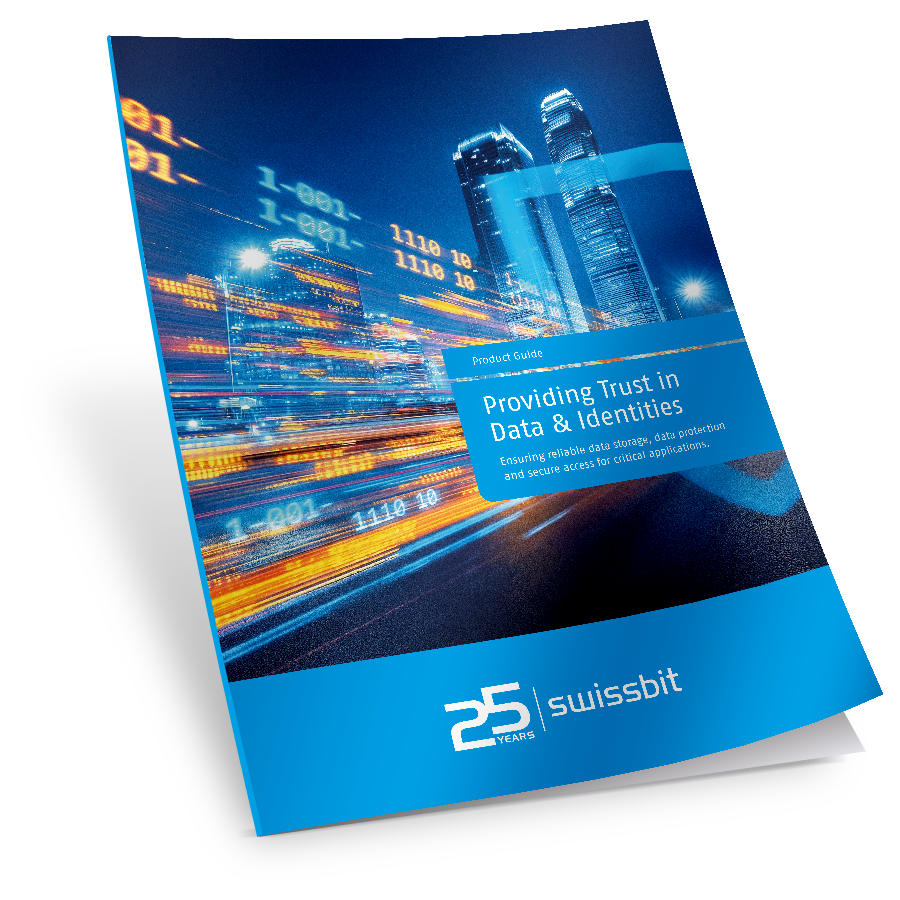
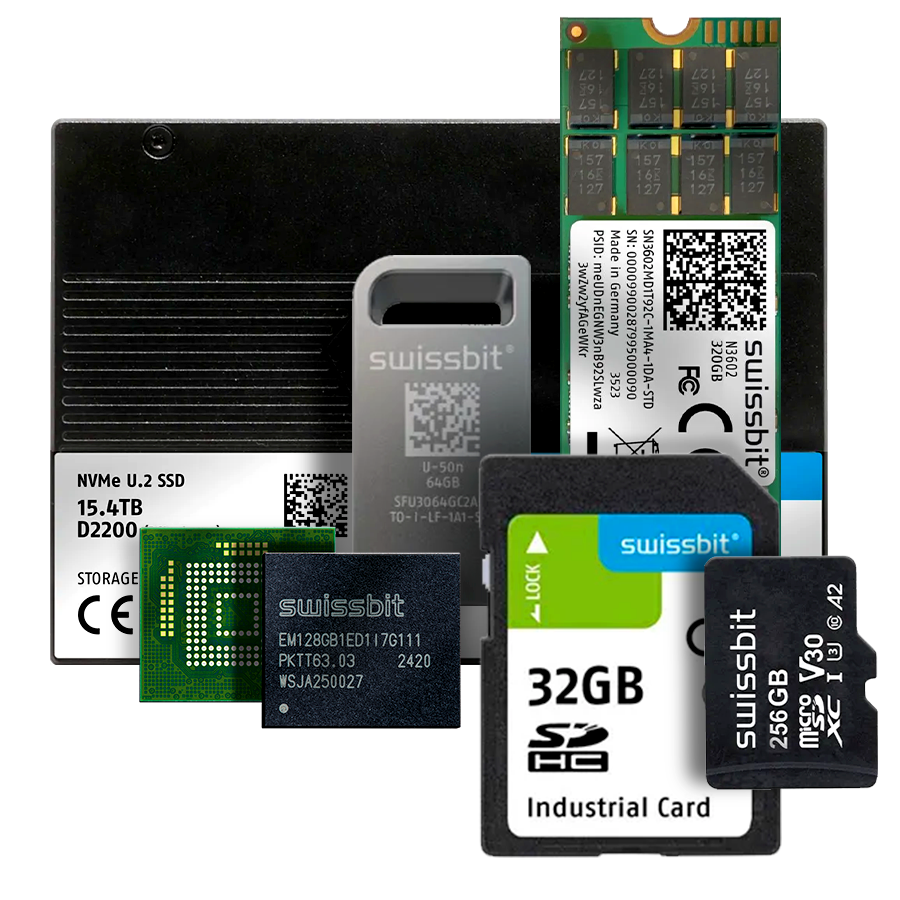
Reliable Storage Technology for Industrial Applications
Consumer storage fails under industrial conditions. Temperature extremes, continuous operation, and decade-long lifecycles require NAND flash and SSD technology engineered for reliability, not just capacity.