Built for the long run: 25 years of Swissbit – Part 1
The choices that shaped us
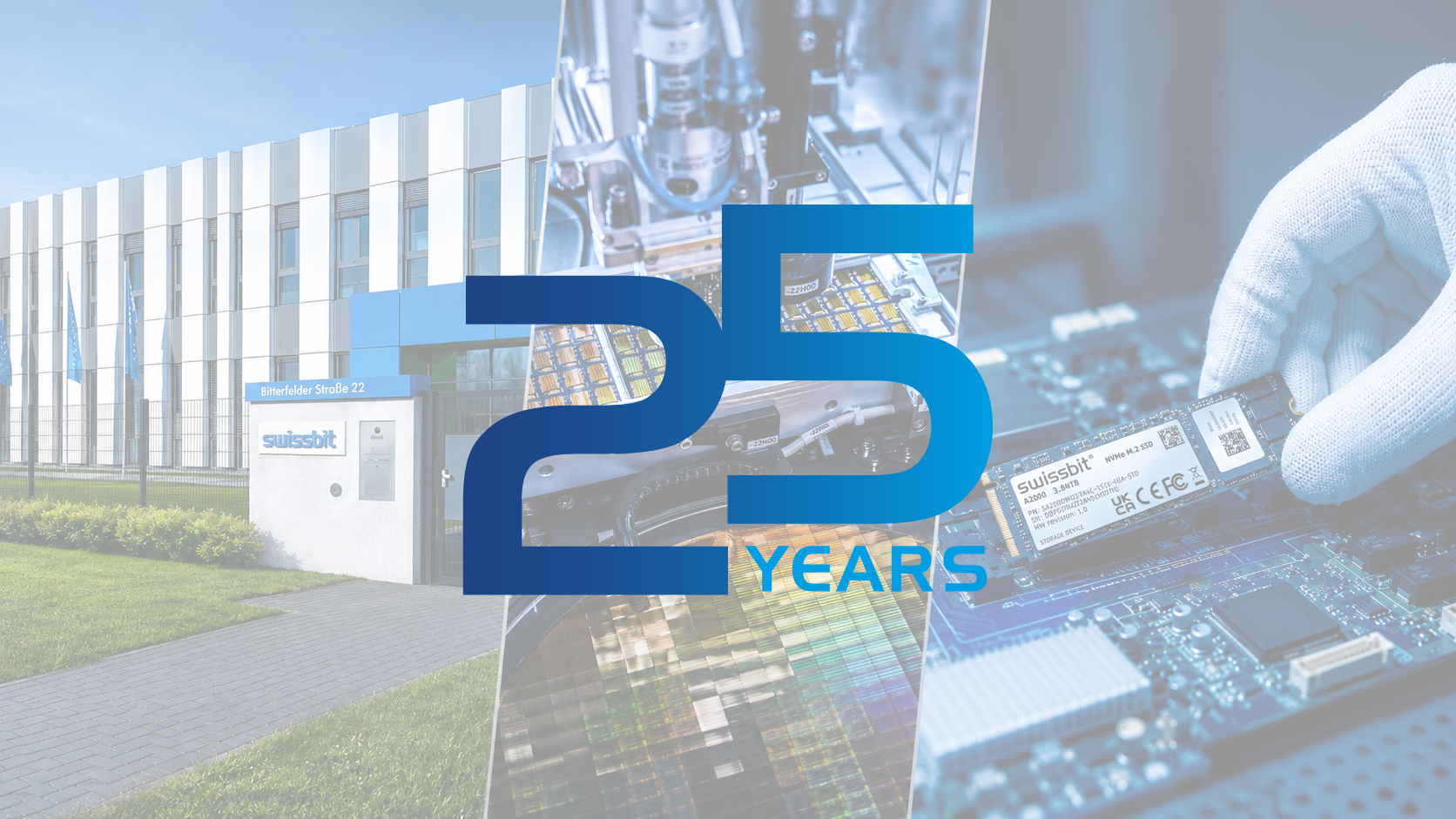
Anniversaries are a good reason to look back – but only if they also help explain the present. Swissbit turns 25 at a moment when memory, security and supply chains are being redefined by AI, regulation and geopolitical change. In this two-part series, I want to reflect on some of the decisions that shaped Swissbit from the beginning – and why they matter more today than we could have imagined at the time.
When we founded Swissbit in July 2001, the timing was not exactly comfortable. The dotcom bubble had burst, investment was slowing, and the memory market was under severe price pressure. Swissbit came out of a management buyout of the memory module business of Siemens Switzerland. At the beginning, our world was close to the products people associated with the early 2000s: DRAM modules for PCs, USB sticks, memory cards.
It sounds almost simple today. But at the time, we had to answer a basic question: what kind of company did we want to become? Looking back after 25 years, I would say Swissbit was shaped less by the markets we entered than by the markets we deliberately left behind.
Looking back after 25 years, I would say Swissbit was shaped less by the markets we entered than by the markets we deliberately left behind.
The first lesson: volume is not a strategy
The DRAM business taught us quickly that scale alone does not create stability. Prices fell, overcapacity grew, and competition became tougher every year. The financial crisis after 2008 made the situation even clearer, especially in the European PC market.
So we shifted our focus to industrial storage.
At first, this looked like a niche. It was not the loudest part of the market. But it was a place where memory was not just a replaceable component. Customers needed long-term availability, controlled product changes, endurance, reliability and predictable total cost of ownership. They needed products that could support systems in the field for many years.
That suited us. Industrial storage forced us to think in lifecycles, not quarters. It made firmware, qualification, traceability and manufacturing quality part of the product from the beginning. When we exited the DRAM business in 2017, it was the logical consequence of a direction we had already chosen.
Why Berlin mattered
Another early decision was just as important: we kept manufacturing and integration expertise in Europe.
For industrial products, development and manufacturing cannot be separated too far from each other. Architecture, hardware design, firmware, semiconductor packaging, testing and qualification all influence the final result.
In 2002, we established our manufacturing site in Berlin through the acquisition of Optosys, a specialist in chip-on-board technology. Over the years, Berlin became the place where we learned how to turn memory technology into reliable industrial products.
One example from those early Berlin days still stands out to me. Around the turn of the millennium, the site produced what was then the world’s first 1 GB CompactFlash card in chip-on-board technology – built with four stacks of eight NAND dies each, 32 chips in total. Today, we would call this advanced packaging and 3D integration. Back then, it was simply what was needed to push flash technology further.
With our Berlin-Marzahn facility, opened in 2019, this expertise moved to a new level. Engineering, wafer-level processing, advanced semiconductor packaging, testing, qualification, SMT assembly and cleanroom manufacturing now sit under one roof.
For me, this is one of the central lessons from the first 25 years of Swissbit: some capabilities only become strategic because you keep investing in them long before the market asks for them loudly. In the second part of this series, I will look at why this matters so much now – as the NAND flash market changes, AI reshapes demand, and memory becomes closely linked with security.
Convince yourself of our expertise

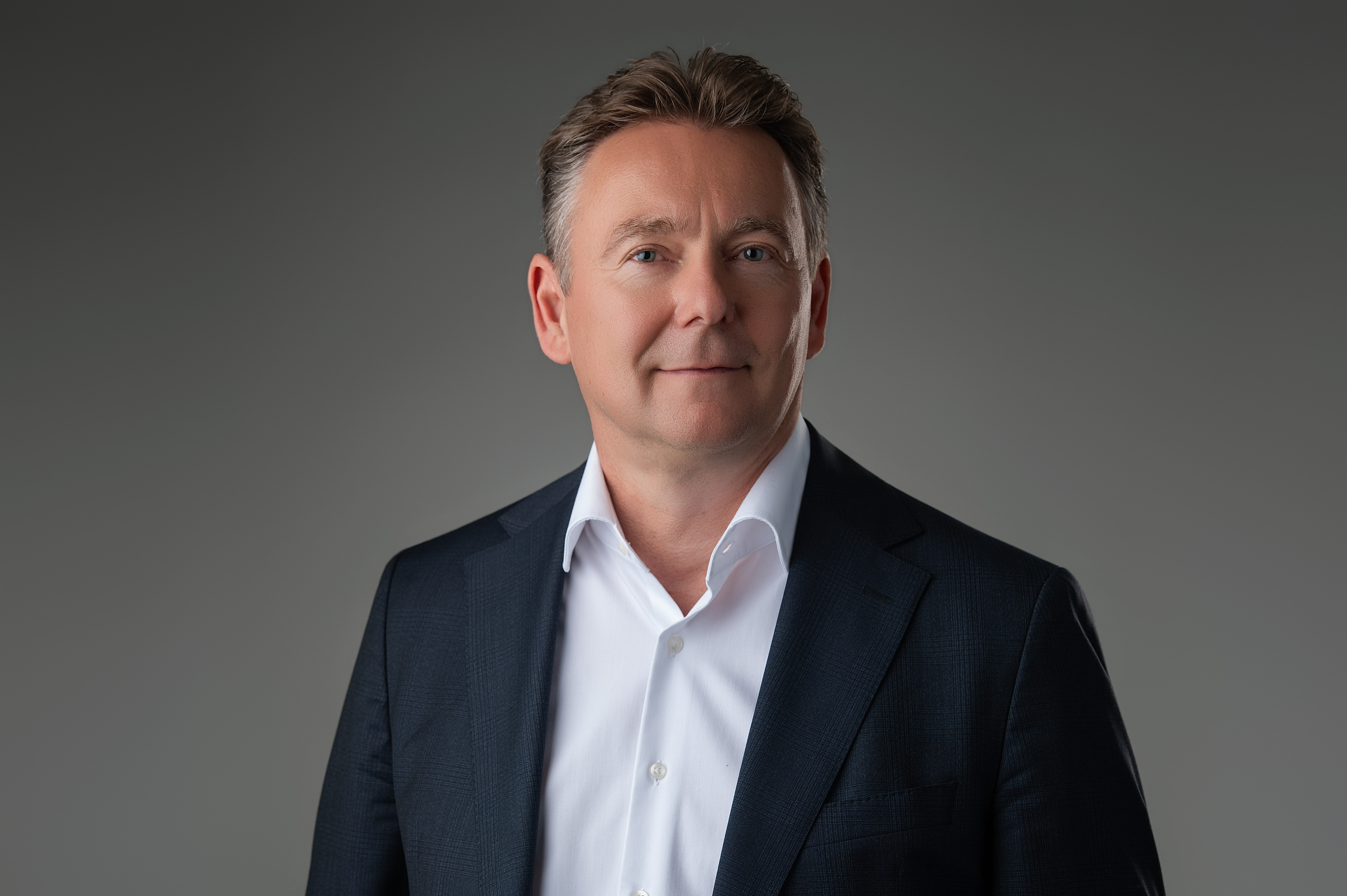
Silvio Muschter is Group CTO of Swissbit. Prior to this, he was CEO of Swissbit since 2017. As a member of the founding team, he was involved in establishing Swissbit AG in 2001. Throughout his career at Swissbit, he has contributed significantly to the growth of the company as Head of Development, CTO, COO, and CEO. He has more than 20 years of experience in the successful development and production of profitable products and in the development of forward-looking strategies.
Receive the latest news and announcements about storage and security solutions as well as current events and new products.