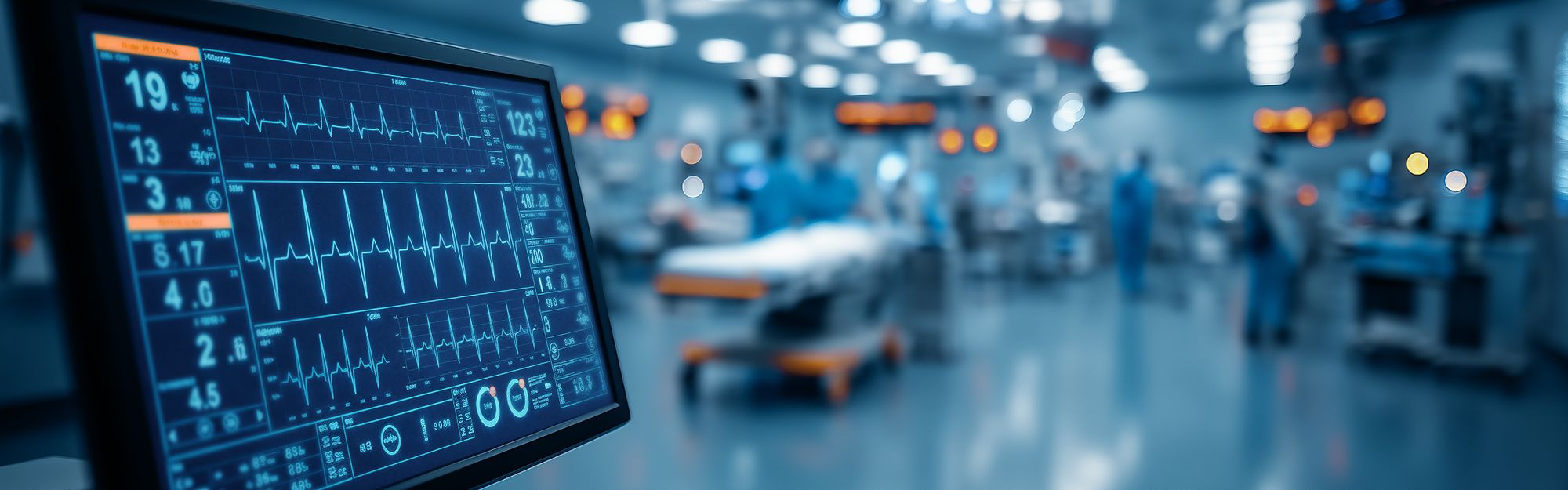
Medical Data Storage
Solutions for Healthcare
Industrial-grade memory & security for medical imaging, diagnostics, and patient monitoring
Medical device manufacturers face mounting challenges
Development teams need storage that survives sterilization cycles, extreme temperatures, and 24/7 operation without failure. Regulatory officers must ensure compliance with evolving medical device regulations, data protection standards, and cyber security requirements. Procurement managers demand long-term availability and predictable supply chains to avoid costly redesigns.
Medical technology data loss: A risk for patients and manufacturers
When a diagnostic imaging system loses patient data mid-scan, or a ventilator's memory fails during critical care, the consequences go beyond downtime, they threaten patient safety, regulatory compliance, and your company's reputation.
Trust in Swissbit storage for the lifetime of your device
Swissbit provides medical-grade storage solutions engineered for: reliability under extreme conditions, built-in security, and lifecycle support that matches your device's operational lifetime.
Why Medical Devices Need Industrial-Grade Storage
Data Storage Solutions for Medical Devices
Swissbit offers a complete portfolio of medical-grade data storage solutions. From compact microSD cards for wearables to high-performance PCIe SSDs for medical imaging workstations. Every product is engineered for reliability, security, and compliance in healthcare environments.


Swissbit helps customers run AI at the edge with PCIe-based storage solutions that deliver high read/write performance, ultra-low latency for fast data access and consistent quality of service, built-in data protection with encryption and key management, and higher storage density in compact edge systems.



Medical devices undergo lengthy development and qualification processes and remain in the market for many years, they require storage that prioritises long-term availability over consumer-grade replacement cycles. Reliability, endurance, and sustained supply are essential to safeguard continuous patient data and diagnostic operations.
Real World Applications for Medical Data Storage
Why Medical Device Manufacturers Trust Swissbit
Swissbit powers critical medical devices across, patient monitoring & diagnostics, medical imaging & PACS systems,
surgical equipment & robotics and connected medical IoT devices.
Many Swissbitstorage products are manufactured in Berlin - the only European producer within-house advanced packaging (SiP technology).
Since 2001, Swissbit has partnered with leading medtech companies to develop storage solutions for the healthcare industry. Our engineers understand IEC 62304 software lifecycle, risk management (ISO 14971),and FDA validation requirements
ISO9001 (Quality Management), IEC60068 (Industrial Temperature Testing), ISO27001 (Information Security), ISO14001 (Environmental), ISO50001 (Energy), REACH, RoHS, Conflict Minerals compliant
Contact us
Get in touch with us and discuss your requirements with us.
Where to buy Swissbit products
Find the local, regional, and worldwide sales contacts.
Related Blogs

In my latest blog article, I examine the healthcare sector more closely. What challenges does the sector face, particularly with regard to cybersecurity? What solutions are available, and what are their benefits? Finally, I share my conclusion.
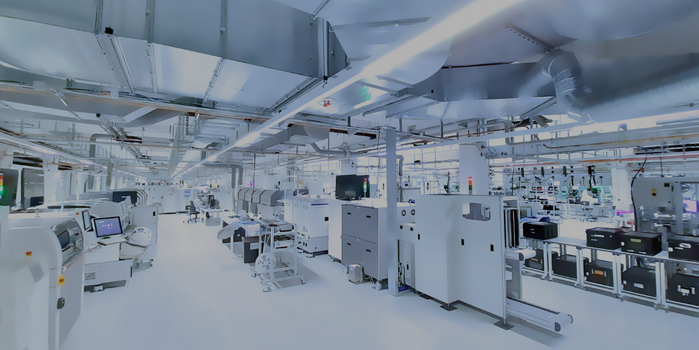
In my first blog post, I explore how companies can ensure the long-term security, reliability and availability of their data and devices. The answer often hinges on the capabilities of the manufacturing process behind the technology.
Not long ago, edge devices relied on simple microcontrollers with limited flash. That was enough when tasks were basic. But today, edge systems are expected to run real-time analytics and even AI inference directly on-site. This shift puts storage into the spotlight. Without fast, reliable memory, even the most powerful processor will stall.
Frequently Asked Questions
Diagnostic devices store data locally on embedded memory (e.MMC, SD cards, SSDs), then transmit via secure protocols to Hospital Information Systems (HIS) or PACS. Industrial-grade storage ensures data integrity from device to diagnosis.
Industrial storage offers high endurance, low latency and sustained performance over years, extended temperature ranges (-40°C to +85°C), and the potential for greater write endurance with pSLC technology. Our modules boast long term availability and allow customization which allows them to be optimized for specific workloads and medical use cases.
Yes. Specifically for medical devices with microSD card slots. Swissbit's Security Upgrade Kit adds hardware-level encryption and secure boot in the microSD card form factor - without hardware redesign.
Swissbit mitigates supply chain risks for medical devices by maintaining in-house production in Germany for many of its product sand controlling key manufacturing steps end-to-end. This ensures long-term component availability, strict quality oversight, and stable delivery even during global disruptions.
Storage is responsible for preserving patient data, diagnostic images, event logs, AI models, audit trails, and system software. In medical applications, data loss or corruption can impact diagnoses, patient safety, regulatory compliance, and system availability. Therefore, storage must provide high reliability, data integrity, and long-term availability.
Medical OEMs typically face four key challenges: data integrity and protection against corruption, long product lifecycles requiring extended product availability, high endurance for continuous logging and image storage, and increasing cybersecurity and regulatory requirements. These challenges become even more critical in AI-enabled and mission-critical medical systems.
Industrial storage is widely used in MRI systems, CT scanners, X-ray and digital radiography systems, ultrasound platforms, patient monitoring systems, defibrillators and wearable medical devices, laboratory analyzers, medical robots, Edge AI imaging platforms, and electronic health record infrastructure.
Consumer storage is primarily designed for office and personal computing environments, BOM chnages are made without notification and products diapear from the market from on day to the other. Medical devices often operate 24/7, require significantly longer lifecycles, and must withstand power interruptions, temperature variations, vibration, and continuous write workloads. Industrial SSDs therefore offer higher endurance, better power-fail protection, extended lifecycle support, enhanced data integrity mechanisms, and long-term BOM stability.
Data integrity is mission-critical in medical imaging. Corrupted X-ray, CT, MRI, or ultrasound images may delay diagnosis or require repeat examinations, worst case this could even mean a wrong diagnosis. Industrial storage uses technologies such as advanced error correction code, short ECC, end-to-end data protection, wear leveling, read-disturb management, health monitoring, and power-fail protection to ensure diagnostic images remain accurate and accessible.
AI-enabled imaging systems rely on fast local storage for AI inference data, image caching, model storage, audit logs, and patient records. Industrial NVMe SSDs provide the performance, reliability, and lifecycle stability required for local AI processing while helping manufacturers meet cybersecurity and traceability requirements.
Industrial storage can support AES-256 hardware encryption, Secure Boot, signed firmware, Crypto Erase, and firmware protection mechanisms. These security features help protect patient data and support compliance with healthcare cybersecurity requirements.
AES-256 encrypts all data stored on the drive, making patient records, diagnostic information, and medical logs unreadable without proper authentication. Benefits include protection of patient confidentiality, support for GDPR and HIPAA compliance, and security during service, maintenance, or decommissioning.
Unexpected power loss can lead to data corruption, device downtime, lost patient information, and interrupted medical procedures. Industrial-grade storage uses transaction-safe firmware, redundant structures, and recovery mechanisms to ensure reliable operation after sudden power interruptions.
Medical robotics demands deterministic performance, reliable logging, high endurance, low latency, secure software storage, and fast boot times. Storage systems must support continuous operation while ensuring that control software and operational data remain protected and available.
Many portable and embedded medical platforms have limited PCB space. Industrial e.MMC devices provide a small footprint, low power consumption, long product availability and industrial-grade reliability.
Medical equipment often remains in service for 7 to 15 years or longer. Requalifying storage components can be expensive and time-consuming. Long lifecycle support helps manufacturers reduce redesign efforts, simplify validation processes, maintain certification status, and improve supply chain stability.
Common storage form factors include M.2 NVMe SSDs, SATA SSDs, PCIe BGA SSDs, eMMC, SD cards, and microSD cards. The optimal choice depends on capacity, performance, power consumption, and available installation space.
Key evaluation criteria include reliability and endurance, data integrity mechanisms, power-loss protection, security features, long-term availability, regulatory support, operating temperature range, health monitoring capabilities, and lifecycle management.
As AI-enabled medical devices increasingly fall into high-risk categories, storage must support traceability of AI decisions, secure storage of AI models, audit logs and version history, data integrity, cybersecurity, and long-term lifecycle compliance. Storage is becoming a key component of regulatory readiness rather than just a hardware element.