Swissbit 博客

Cyber Resilience Act: Who is affected by CRA, and what needs to be done now
At Embedded World in March, one of the hottest topics was the EU's new Cyber Resilience Act (CRA). In his blog post, Matthias Poppel outlines who is affected, what obligations the CRA entails, and why companies must act now to ensure their products remain marketable in the EU beyond 2027.

Eight Compelling Reasons to Opt for Reliable Storage Solutions
In today's data-driven world, the reliability and security of memory solutions are paramount in a vast array of applications. While consumer-grade products may be sufficient for everyday tasks, they often fall short in demanding industrial and professional applications. Let's delve into the key differentiators that set Swissbit products apart from their consumer counterparts.

4 reasons to use industrial 3D TLC NAND flash as pseudo-SLC
The ability to operate TLC in pseudo-SLC mode with one bit per cell continues to carve out a niche existence. However, for a vast number of applications the economic advantages of this configuration outweigh the disadvantages. We've compiled four arguments to consider.

Wrong Flash Storage: 5 main reasons for occurring issues
NAND Flash SSDs are generally accepted as standard and universal storage devices. Nevertheless, many things can go wrong if you don’t choose the right SSD for your application. Here are the main areas where damage may occur by using unsuited products.
5 reasons why CFexpress is the future
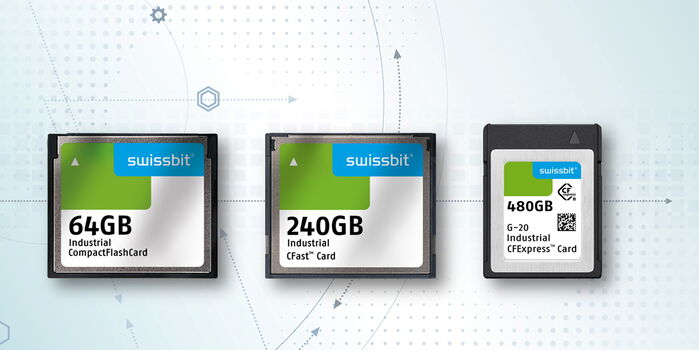
Do you want to know, why does CFexpress have the potential to become the number 1 removable storage media for demanding industrial applications? We've compiled five arguments.

The secret of Swissbit product quality: Part II
After we’ve learned more about the intensive set of tests Swissbit performs before a product is released, the second part of this series is about the ongoing measures to maintain the product quality once volume production has started.

The secret of Swissbit product quality: Part I
Have you ever wondered how we can meet the high demands placed on our products in industrial applications? This two-part blog post provides a detailed insight into our qualification testing procedures…

SATA vs. PCIe: Competition or Coexistence?
SATA is dead, long live PCIe! Wait a minute, it’s not that simple! Let's take a closer look at both interfaces and check where each of them can show their advantages.

The ultimate Swissbit product naming guide
Why are our products called S-45, X-600 or G-26? What does the letter-number combinations stand for and what is that all about? Time for a small guide!

Explained: Garbage Collection
The clear up process of being able to release entire blocks in flash memory is called “garbage collection”. But how does it work?
From CompactFlash to SD Express
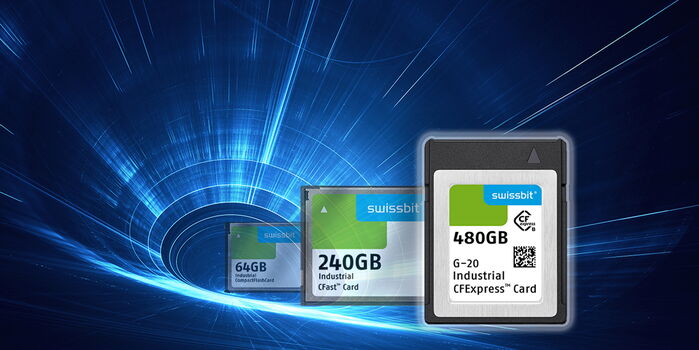
Industrial memory cards over the course of time and what to look out for when you need to use them in industrial applications.

Explained: “Bad Block” Management
How do “bad blocks” occur in NAND flash and what do flash and storage medium manufacturers have to pay attention to during production in order to avoid early failures? Let's have a look!